Skiing at Zao and seeing the famous snow monsters (juhyo) had been on my Japan wish list for ages, so this Lunar New Year holiday I finally made the trip. Here's a full record of my time in Zao — the ski resort, the juhyo, the hot springs, the food, and where we stayed, with honest reviews of everything.
The best season for seeing the juhyo runs roughly from late December to late February. Some say early March still works, but I think the odds of a warm spell by then are pretty high — and once it warms up, the snow monsters melt back into bare branches. I visited in mid-February and the sun was already strong; a few days later and I probably would have seen nothing but twigs. So if the juhyo are your main goal, coming before the end of February is the safer bet.
Getting to Zao Onsen
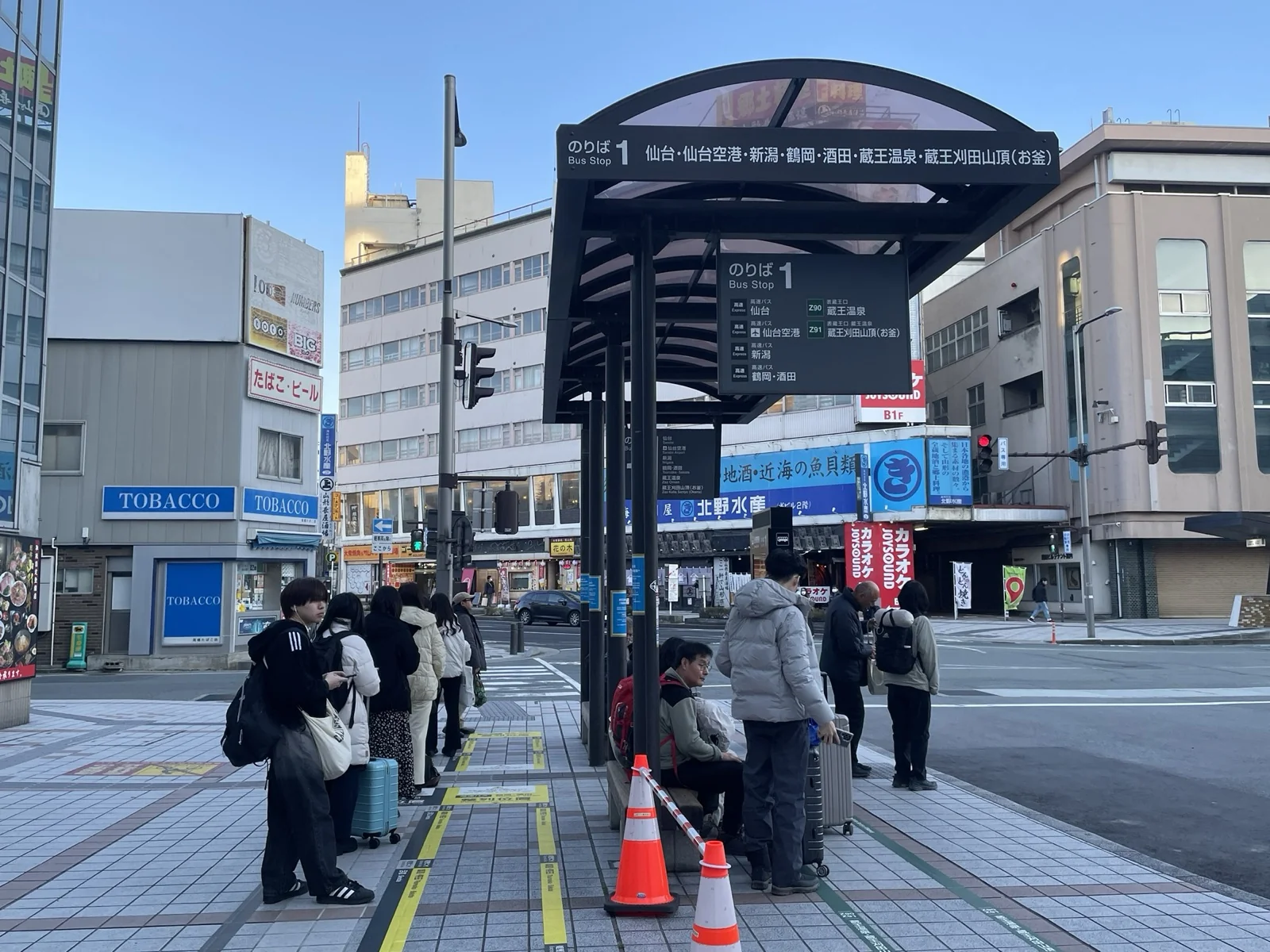
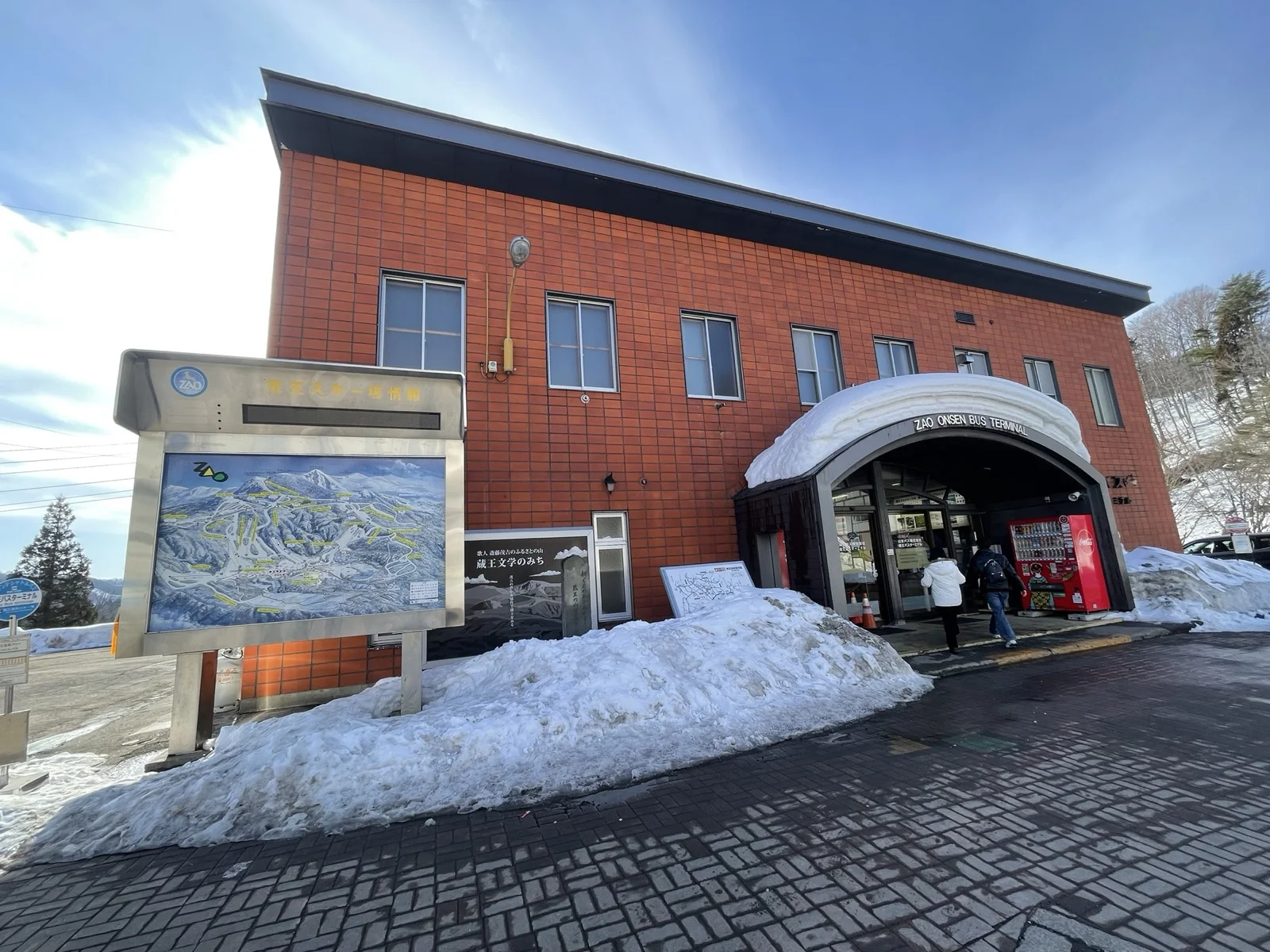
Getting to Zao honestly takes some effort. First, fly into Sendai Airport, then take the JR Tohoku Line (local train) to Sendai Station. Exit the station, cross the pedestrian bridge, and look for the No. 22 bus by the roadside (bus stop location here) — it runs direct to Yamagata Station in about an hour. From Yamagata Station, head to the bus stops out front and find the No. 1 bus at the leftmost stop (bus stop location here), which takes you to the Zao Onsen bus terminal. This No. 1 bus is extremely popular during snow season — line up early or you might not get on and end up watching the bus pull away without you. I'd also recommend double-checking departure times and stop locations on Google Maps.
Zao itself is a small town — once you arrive, everything is done on foot and you won't really need buses. Skiing, hot springs, restaurants, hotels: pretty much all of it is walkable from the Zao Onsen bus terminal.
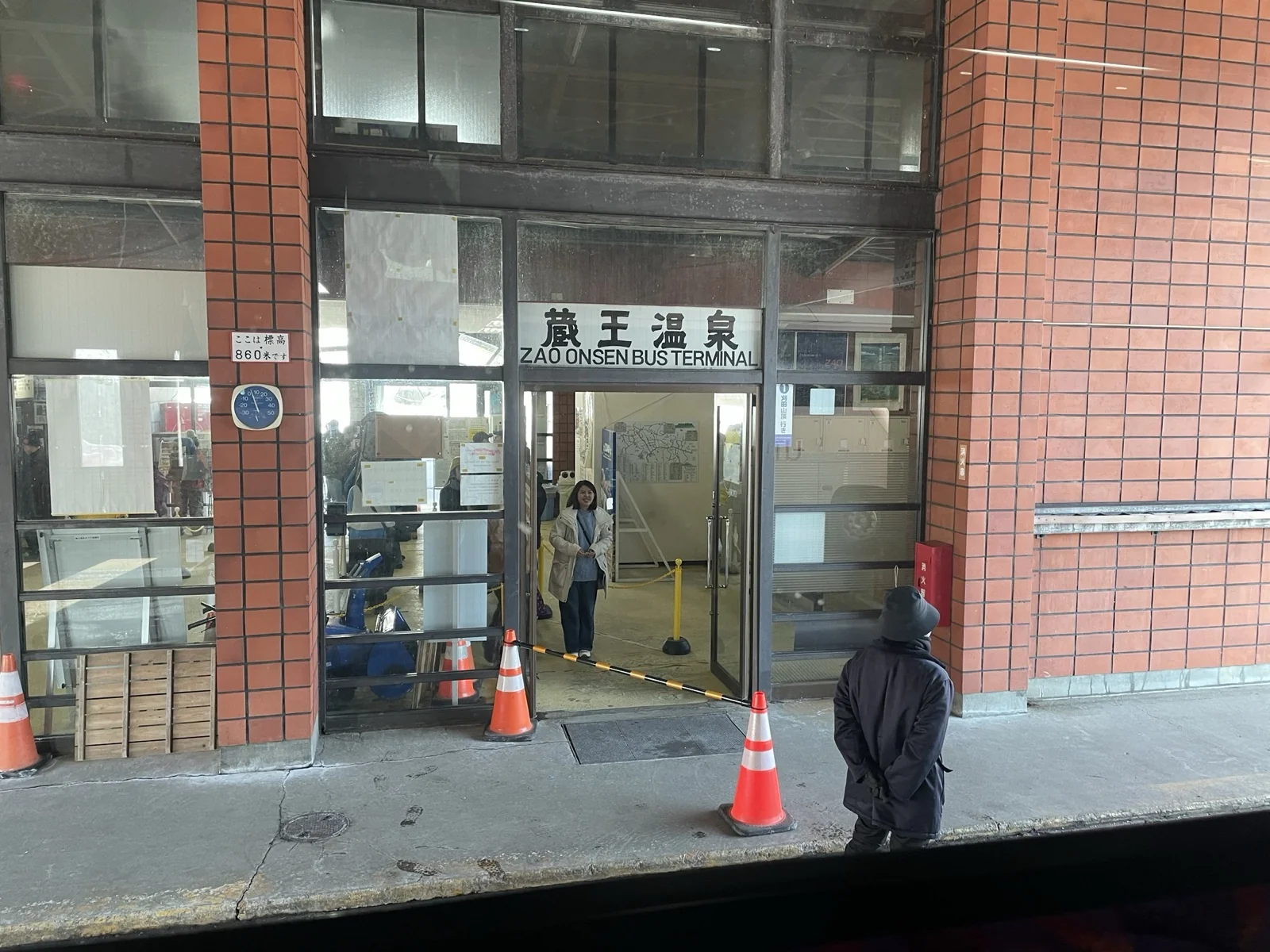
Zao Onsen Ski Resort
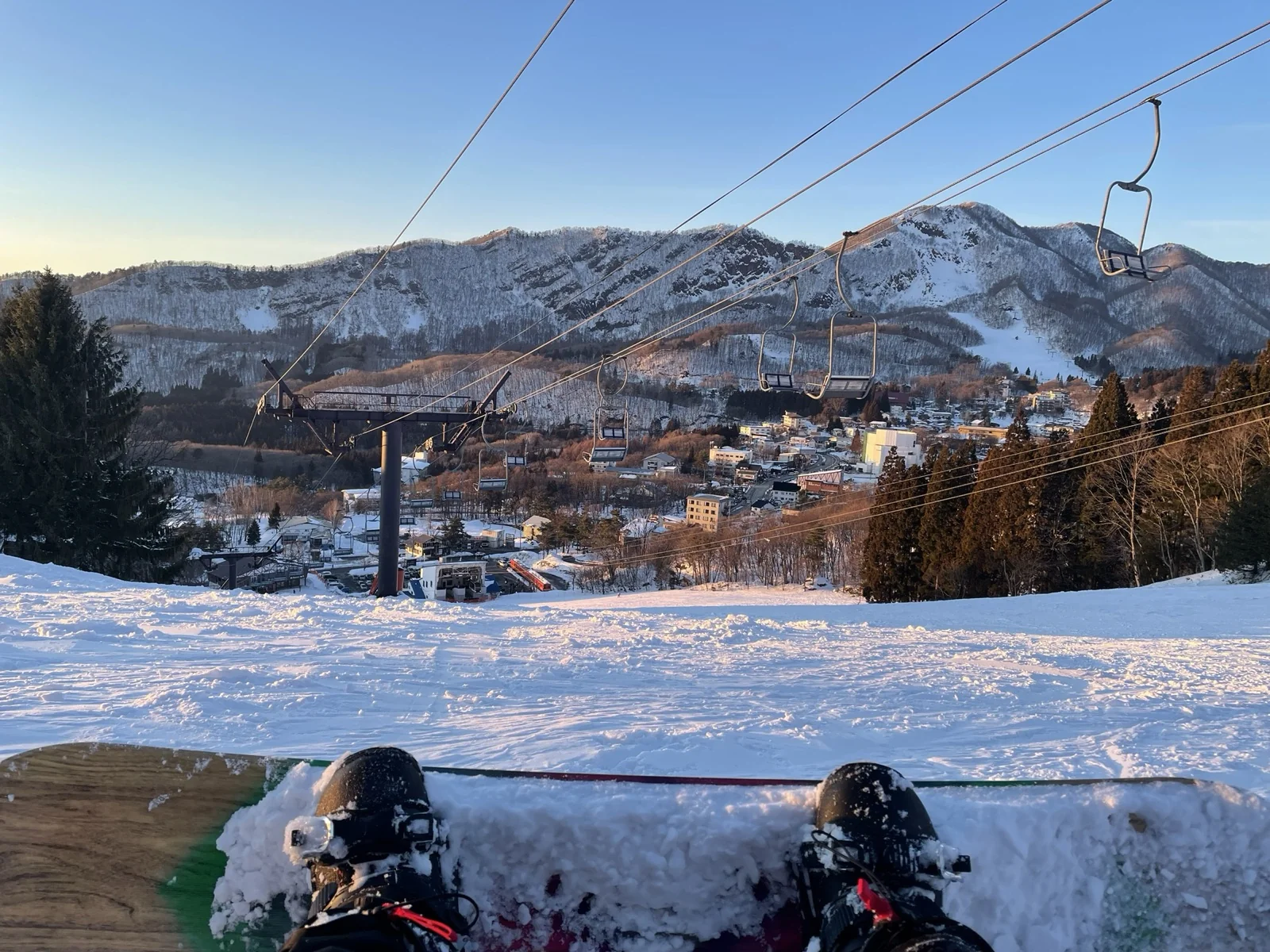
Because of the transport hassle, Zao isn't an ultra-popular ski resort, and there's no all-in-one resort hotel like Hoshino Resorts in Hokkaido offering integrated ski-in/ski-out service — lodging, gear rental, lift passes, restaurants, and entertainment all under one roof. Zao's ski area basically just sells lift tickets, so you need to book your own hotel, find a rental shop, buy lift passes, and hunt down restaurants yourself. In peak season, reserve everything in advance, or you may find no gear left in your size and every restaurant fully booked.
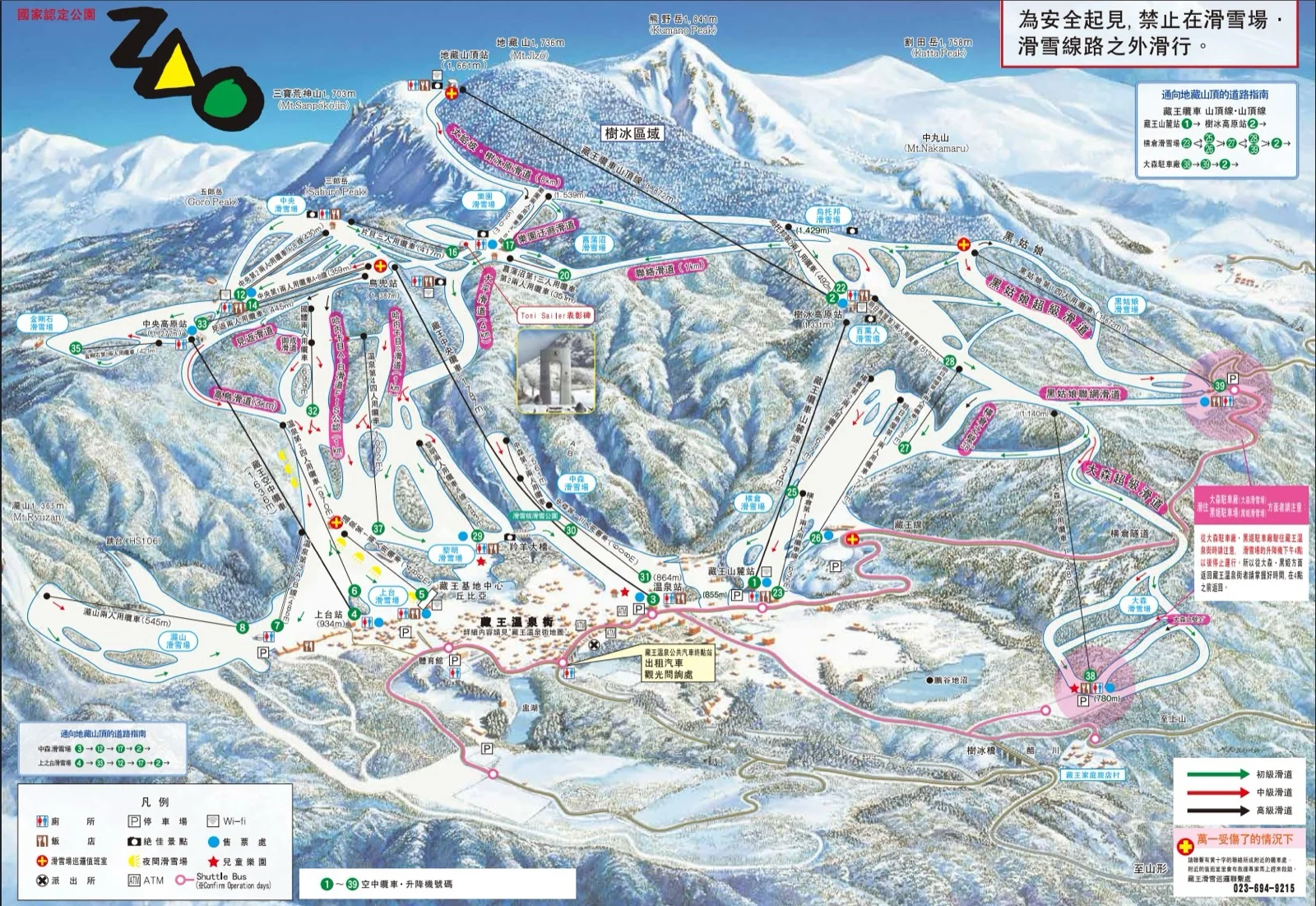
We rented our gear at SHIBA SKI (map link here), a shop right next to the Chuo (Central) Ropeway (Ropeway No. 3) and not far from the Zao Ropeway Sanroku base station (Ropeway No. 1). Once you've got your gear you can buy a lift ticket and hop straight on the ropeway — super convenient. The staff speak English and are really friendly. A boots-plus-board set costs 5,400 yen for one day or 10,200 yen for two days, and returns are accepted until 9:00 pm, which is perfect if you want to go night skiing. Another shop we asked required returns by 4:00 pm — that would have felt way too rushed!
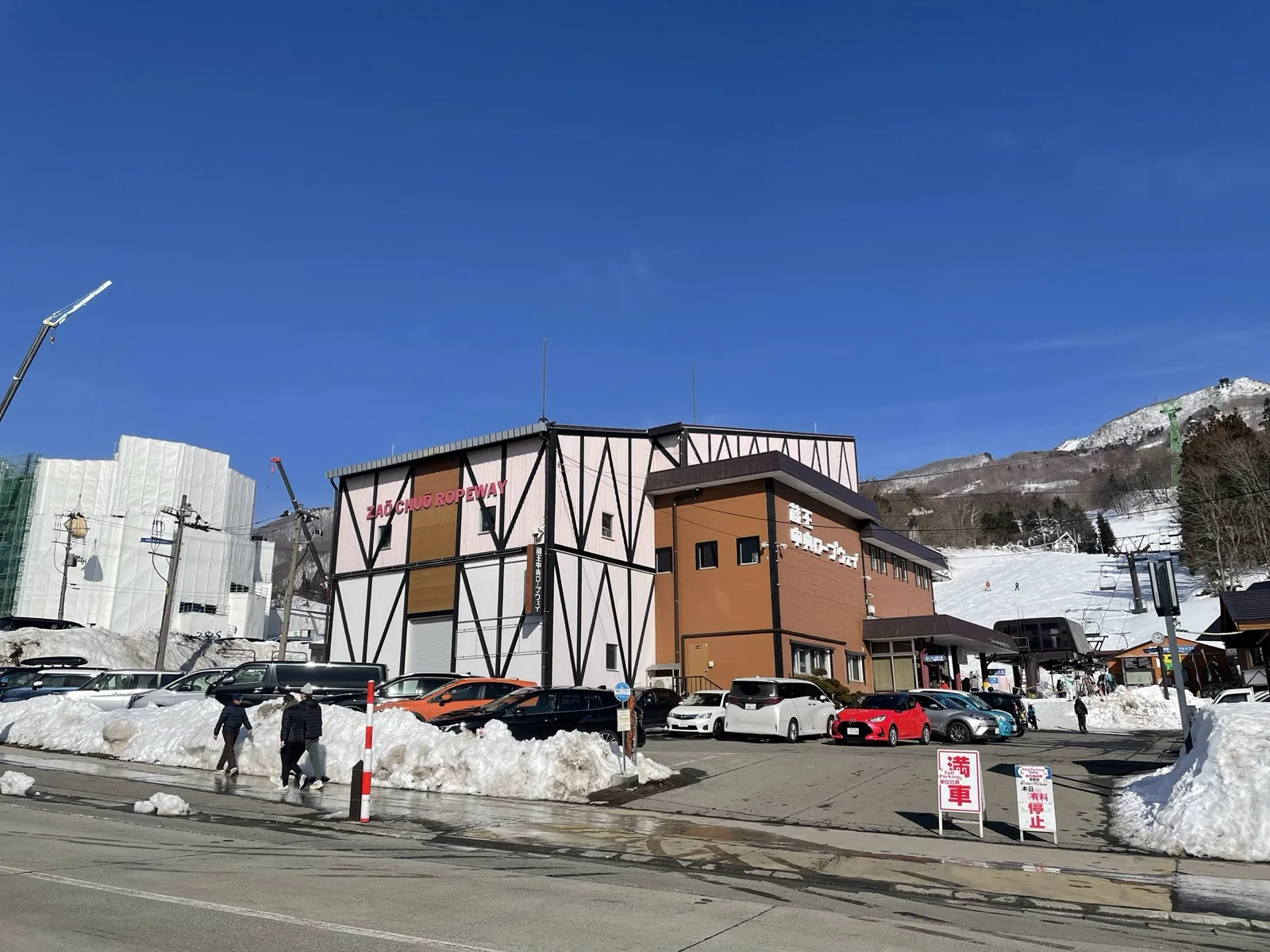
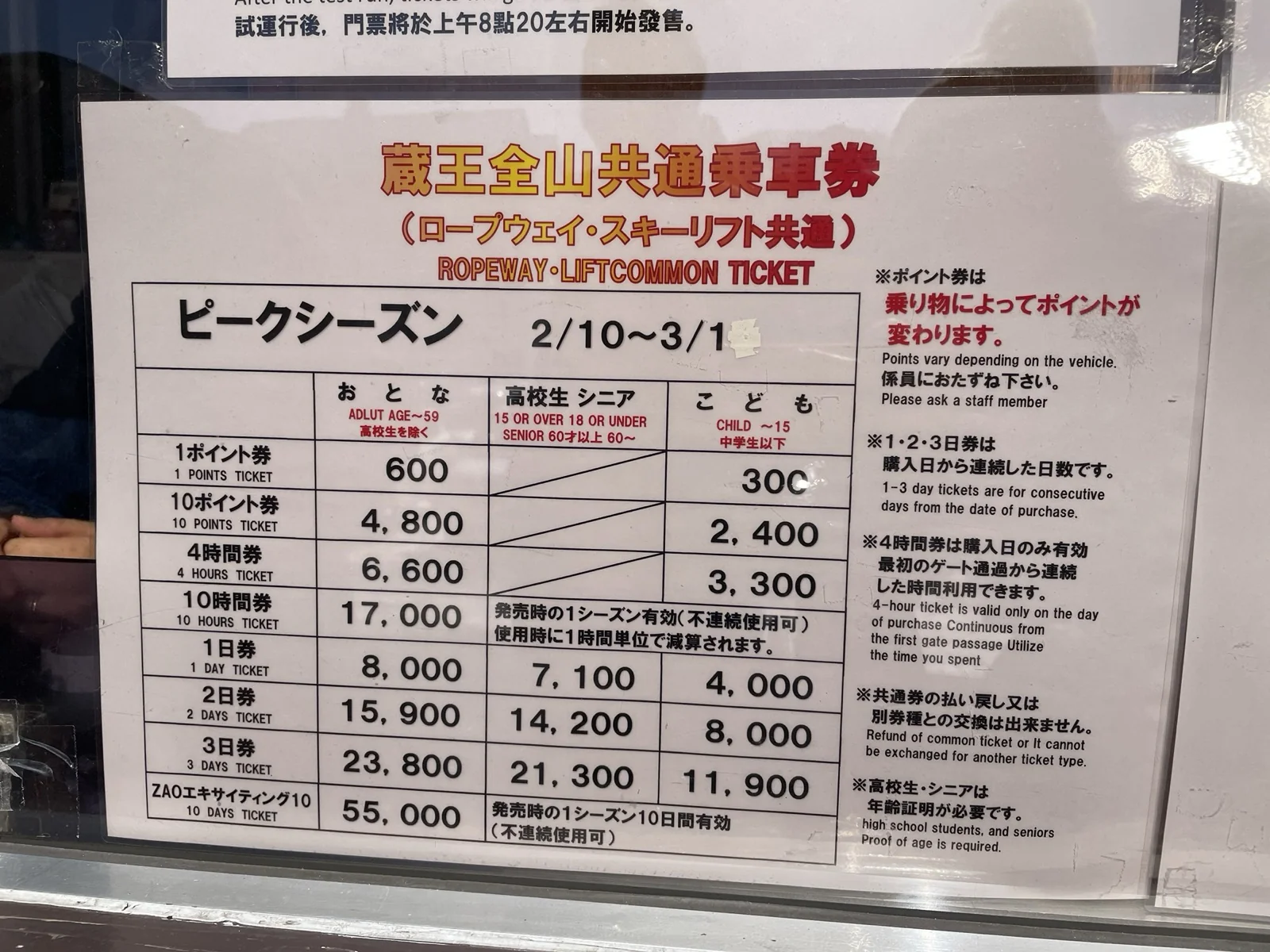
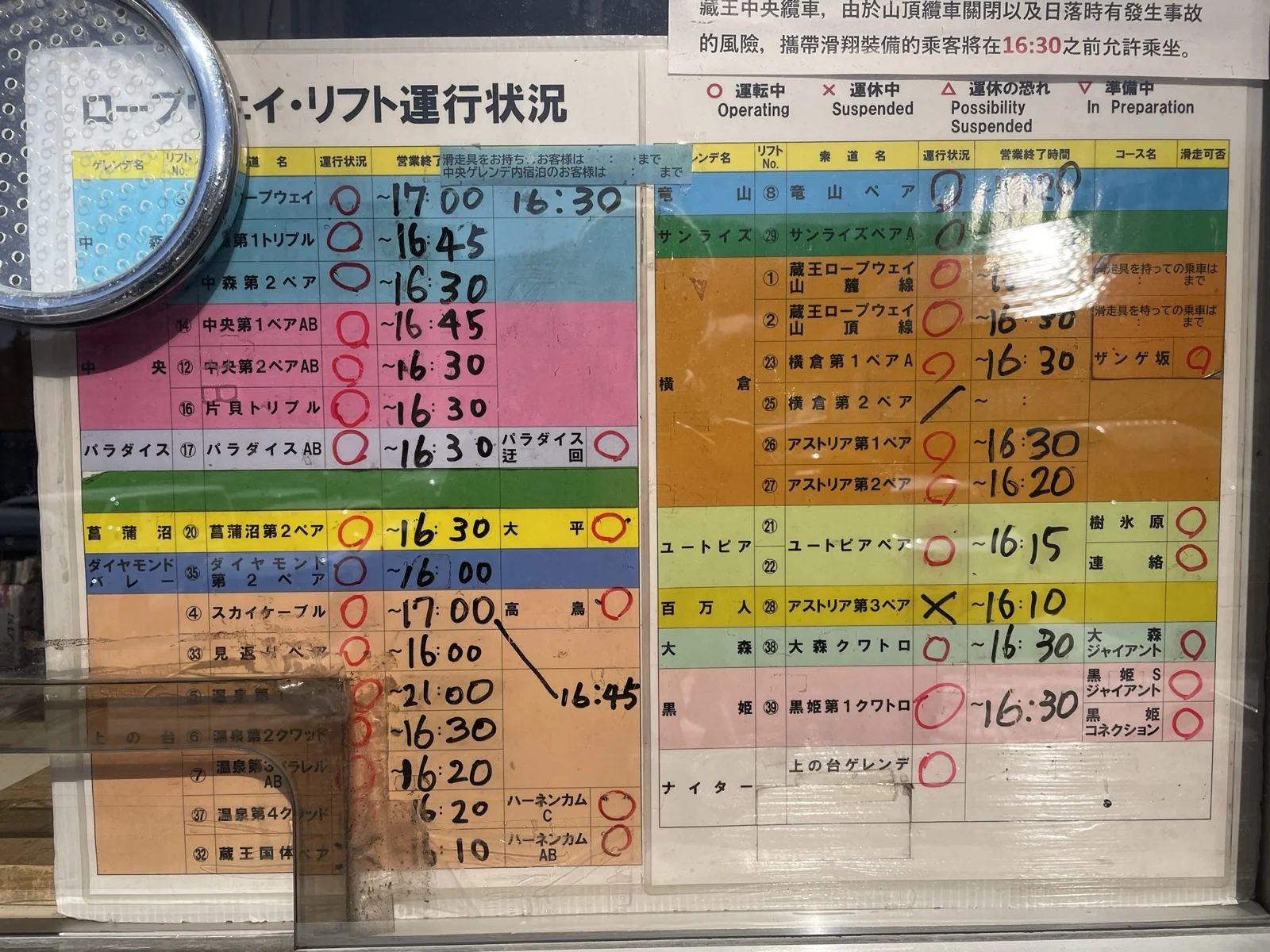
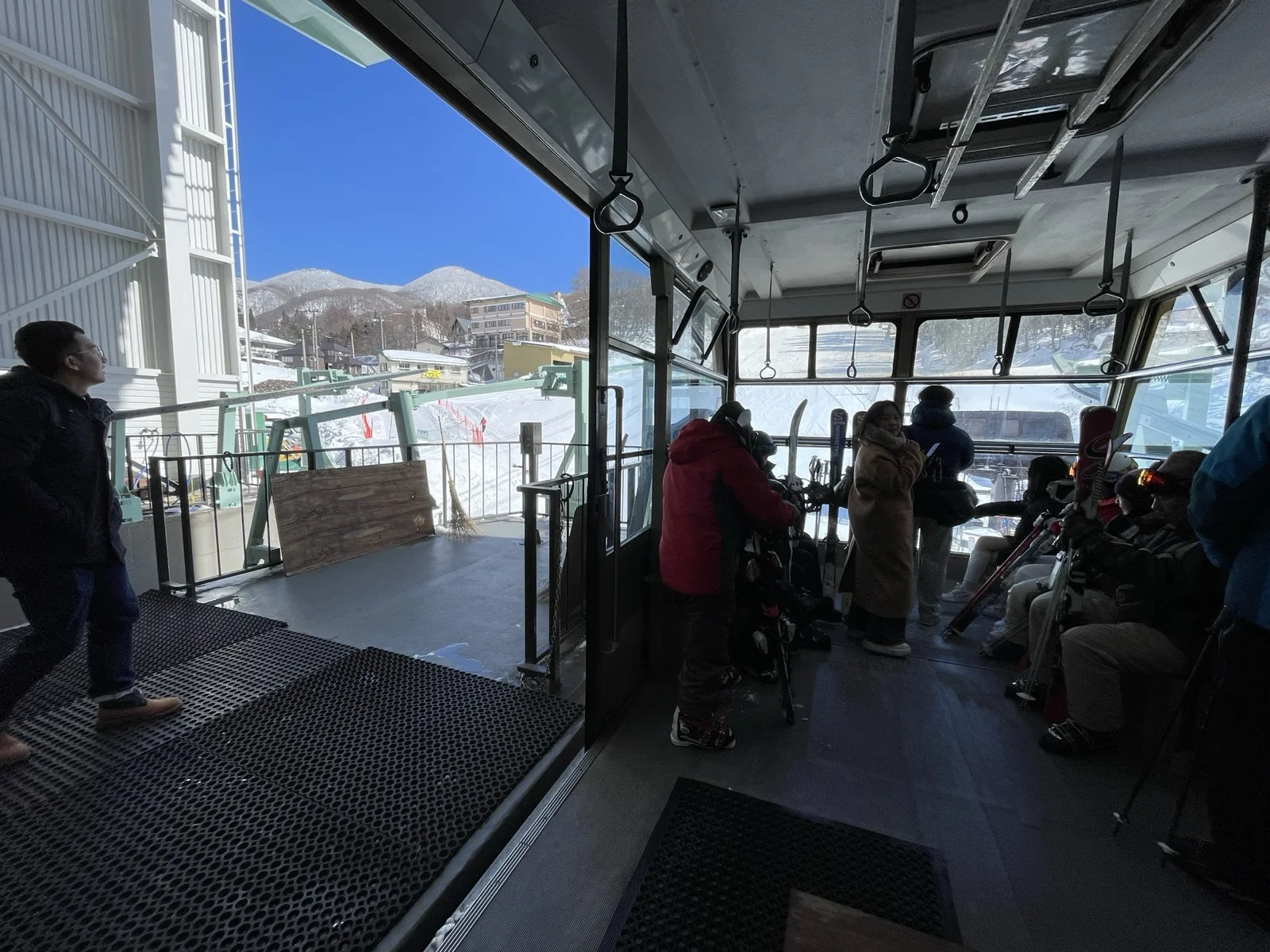
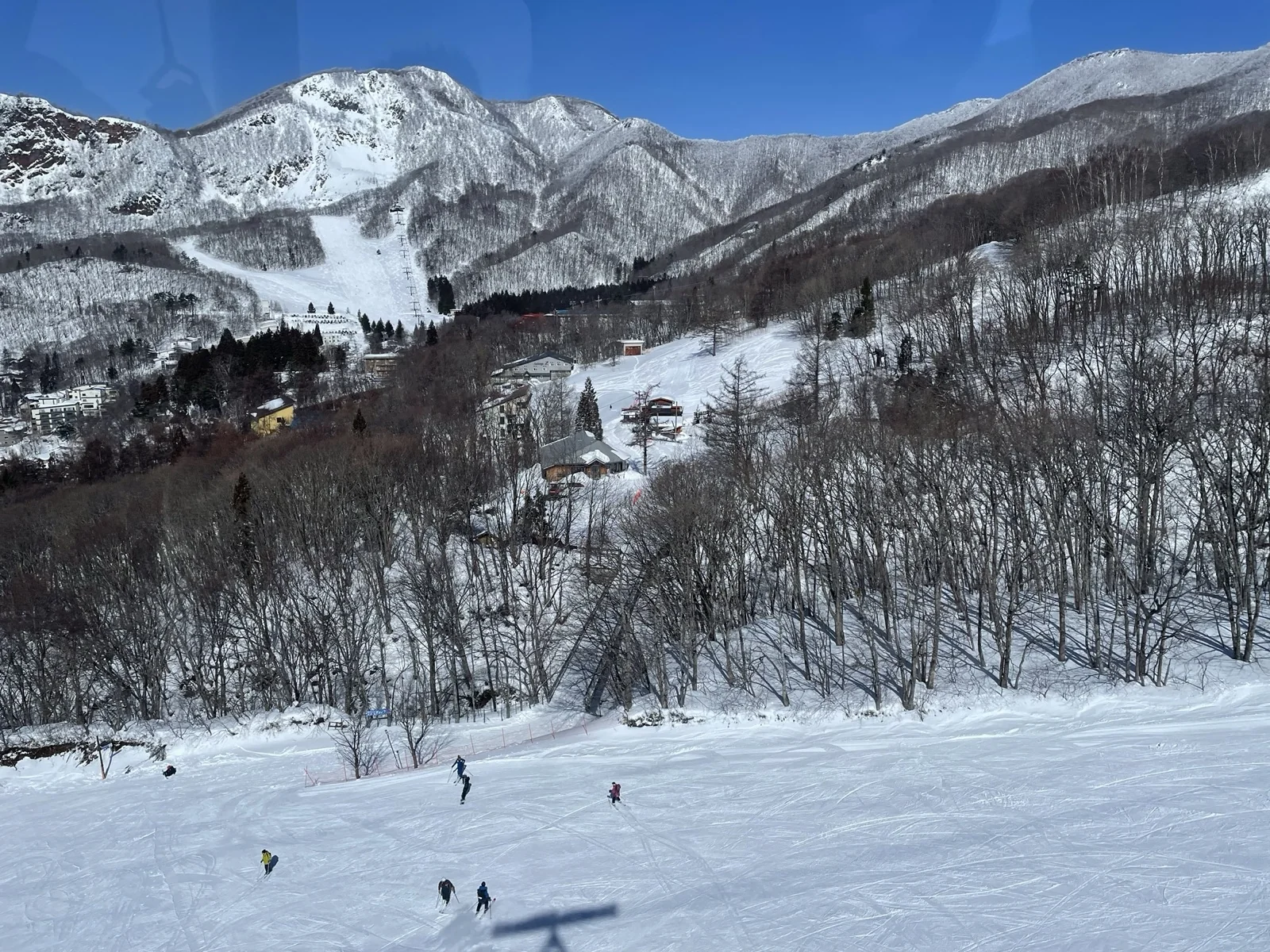
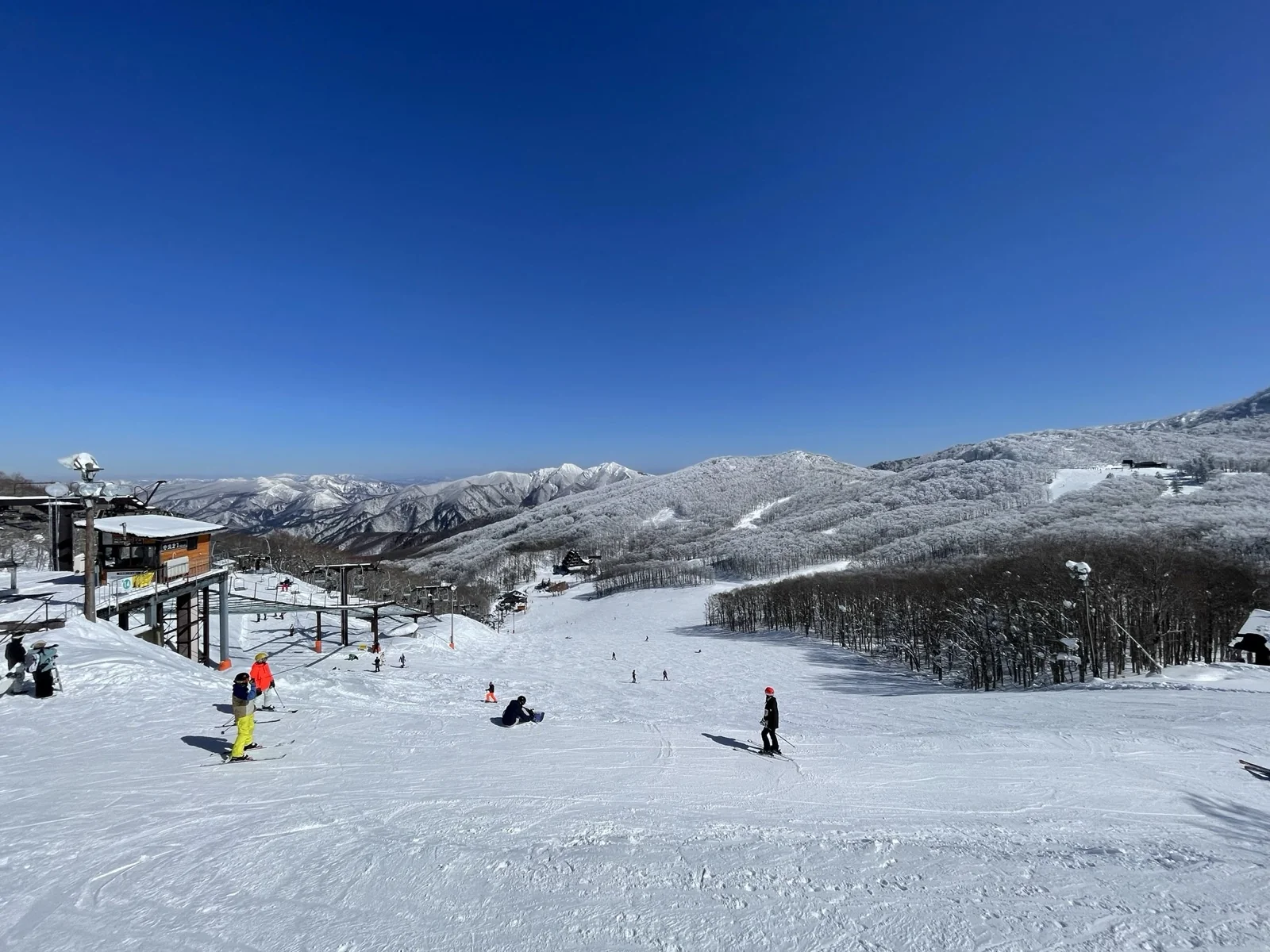
This time we took Ropeway No. 3 from the Central station, connected via Lift No. 17, and skied our way along a few connecting trails before riding Ropeway No. 2 up to the Juhyo Kogen area at the very top. Linking it all together like that was genuinely fun. But if you're only here for the snow monsters, you can simply take Ropeway No. 1 from the Zao Sanroku base station and transfer straight onto Ropeway No. 2 to reach the juhyo area.
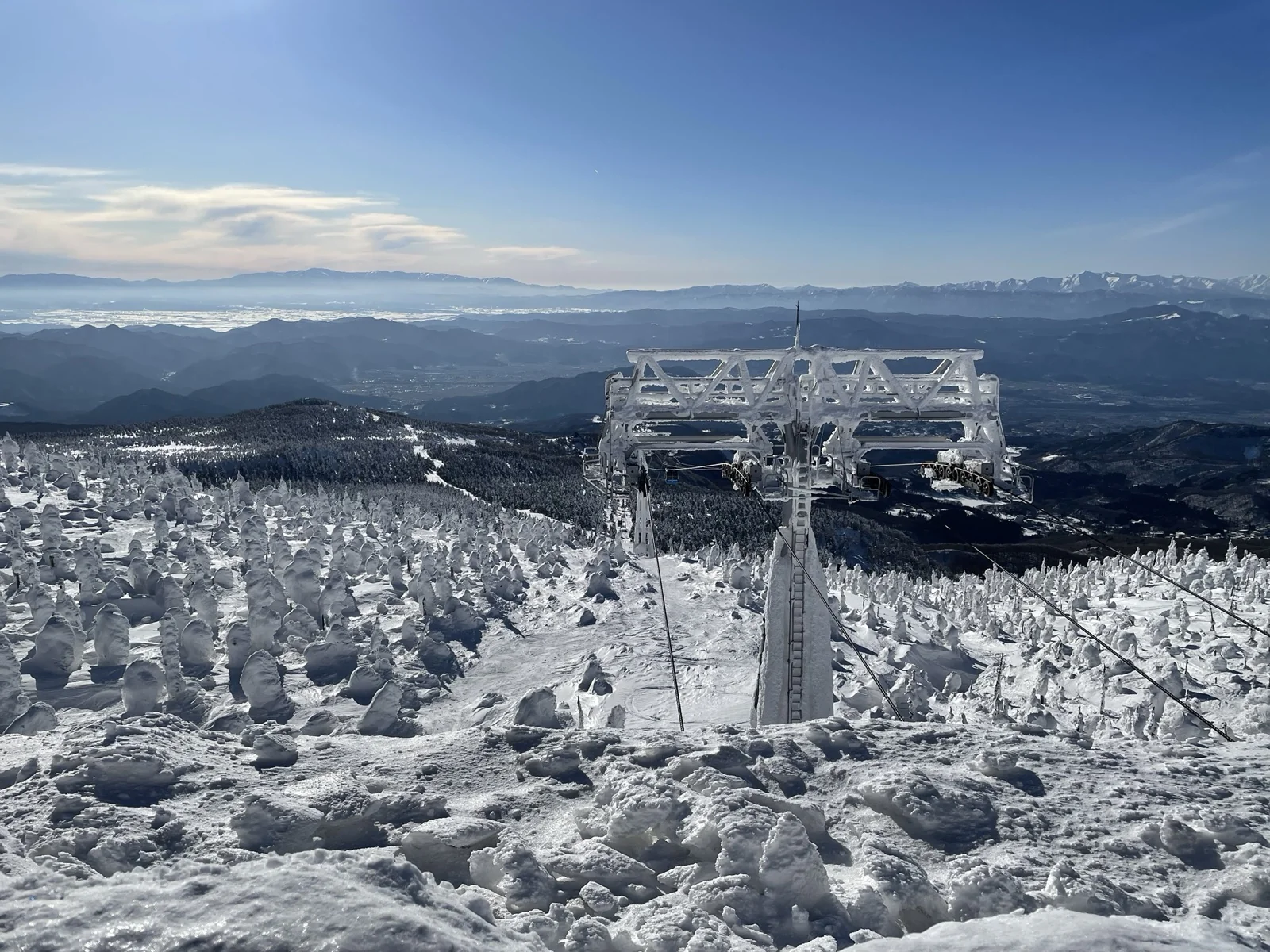
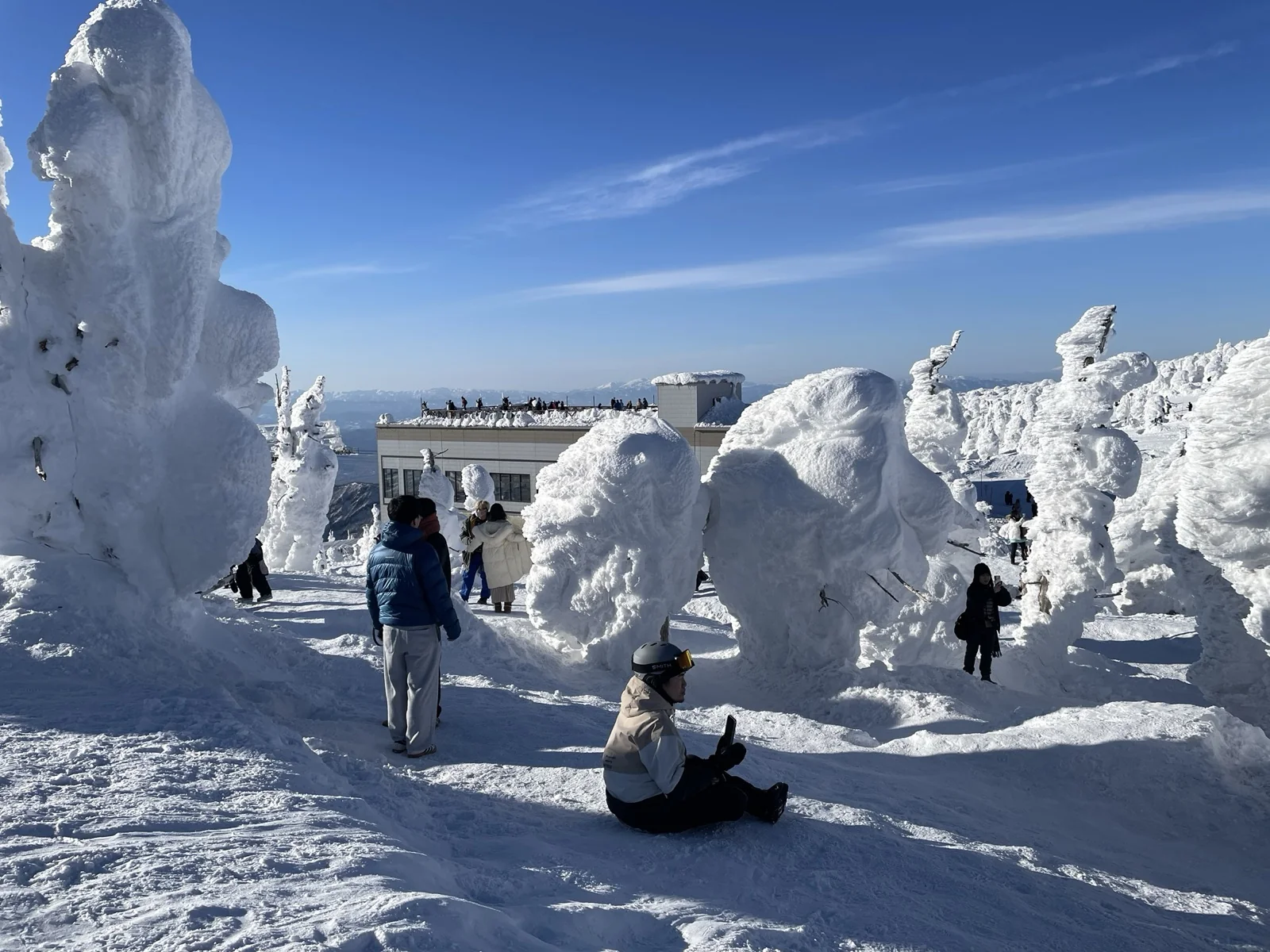
Zao Snow Monsters (Juhyo)
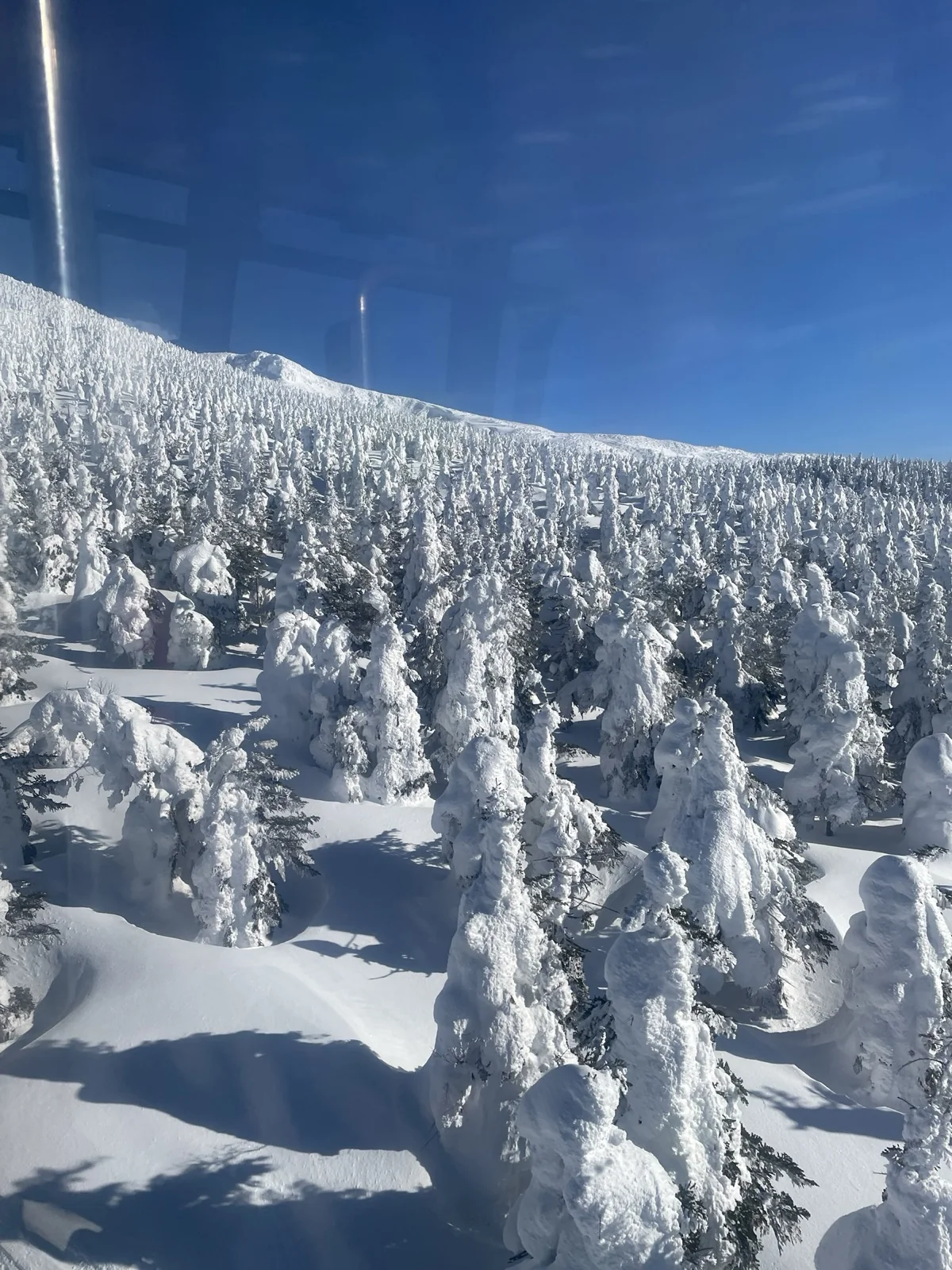
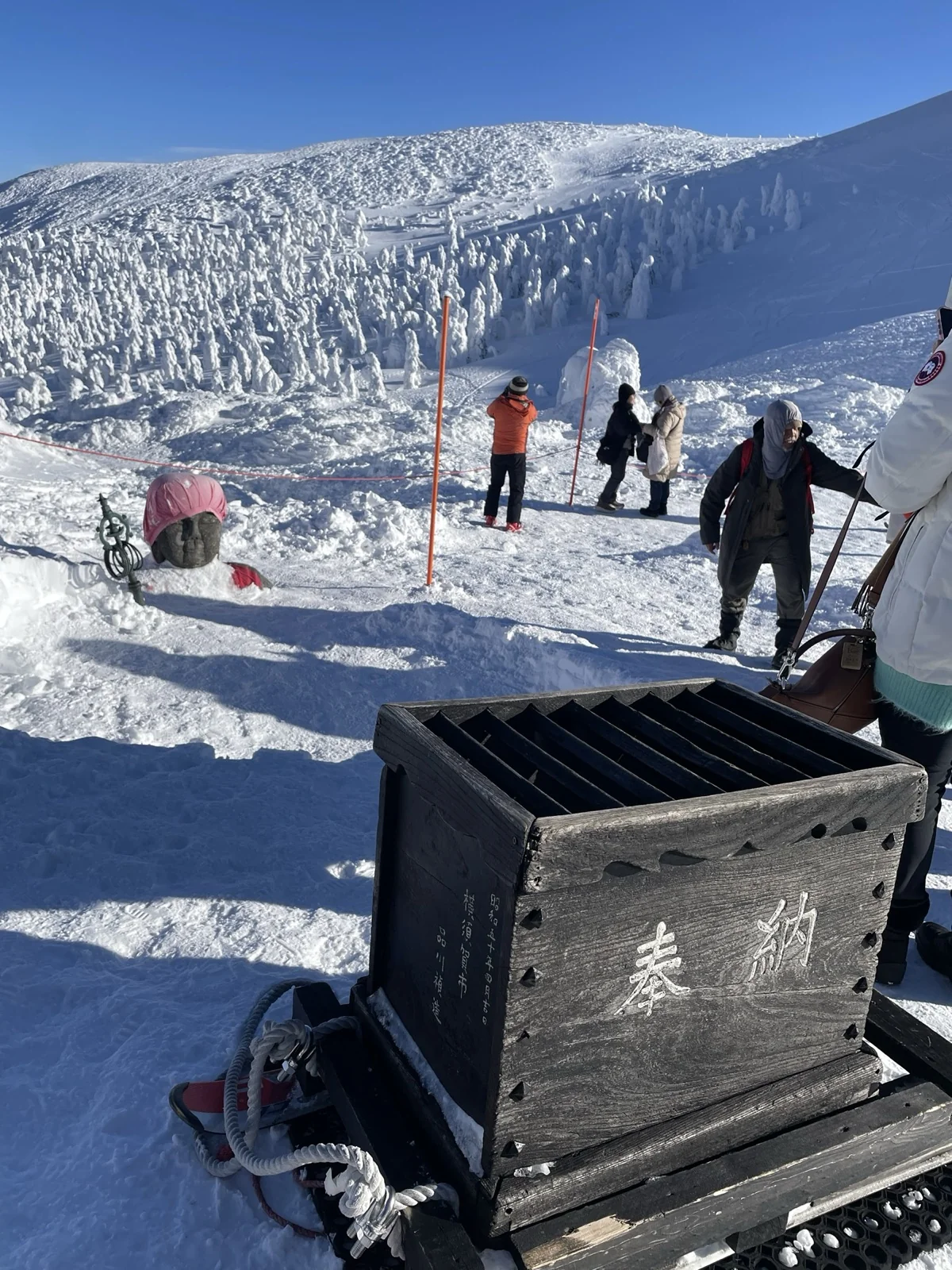
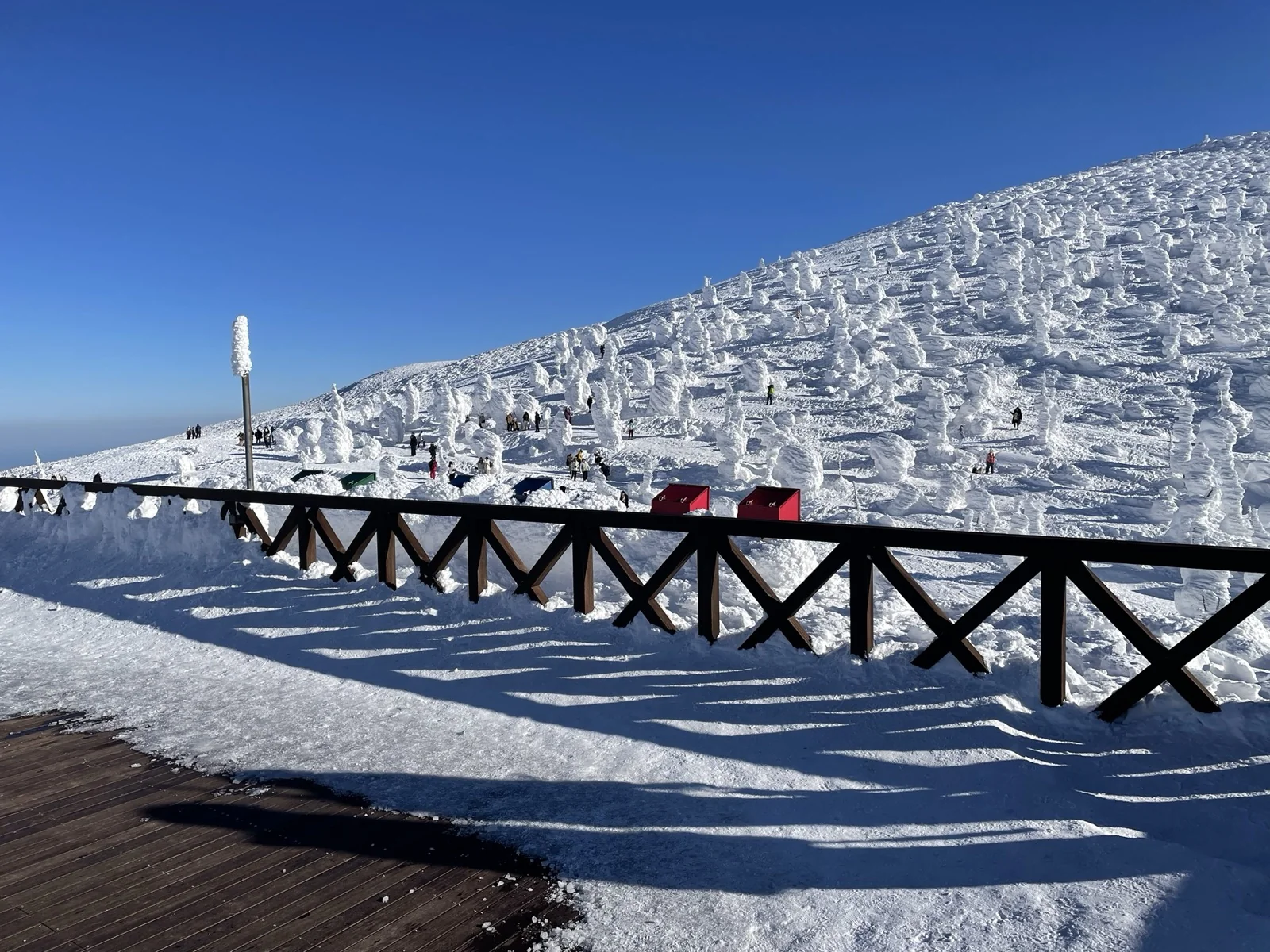
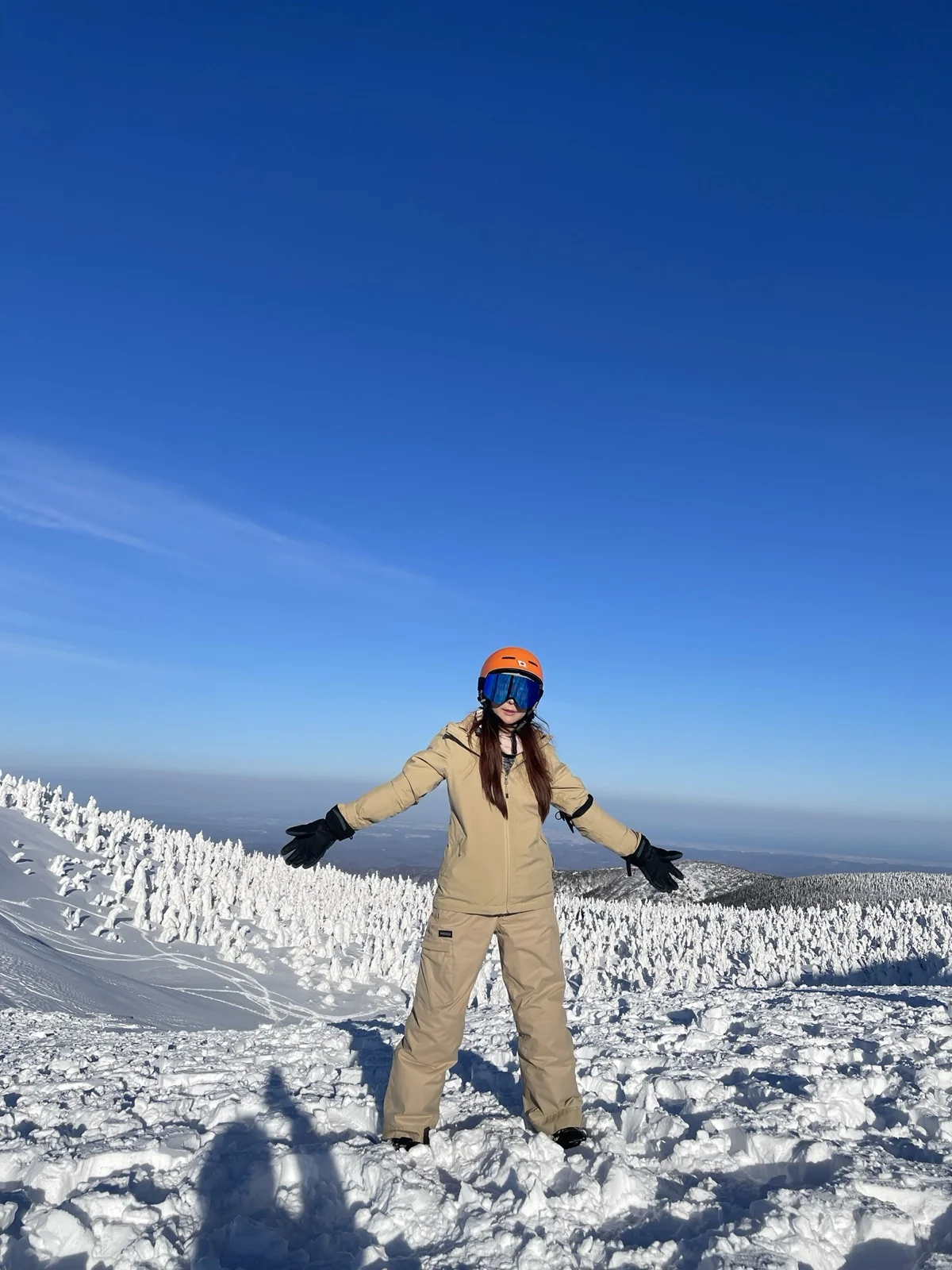
Juhyo are trees completely encased in snow and ice — from a distance they look like an army of snow monsters, which is exactly what they're called in Japan. You'll see juhyo printed on local shop signs and souvenirs everywhere; they're Zao's signature attraction. If you're just coming to see them, take Ropeway No. 1 and transfer to Ropeway No. 2 to go straight to the juhyo area. You can already spot the snow monsters from the Ropeway No. 2 cabin — truly spectacular!
If you're only riding the ropeway to see the juhyo, there's no need to buy the 8,000 yen lift pass — the 2,200 yen ticket is all you need.
Zao Onsen Hot Springs
Zao's other claim to fame is its hot springs, said to help with sore muscles, chronic skin conditions, high blood pressure, and high cholesterol. The water is an acidic sulfur spring — you can smell the sulfur everywhere you walk. If you stay overnight, most lodgings provide free tickets to the public bathhouses, but we found the public bath pools a bit small (like the Shimoyu public bath), with no washing area, so hygiene felt a little questionable — a real concern for those of us with sensitive skin. In the end we decided to pay for a proper large onsen facility instead.
We went to Shinzaemon no Yu (map link here) — 1,000 yen per person with no time limit, offering washing stations, a free lounge, and a variety of baths (separated by gender). Because the water is acidic, it stings a bit if it gets in your eyes. I highly recommend a soak here after a day on the slopes — pure bliss. Just note it closes at 18:00, so arriving by 16:00 at the latest is ideal.
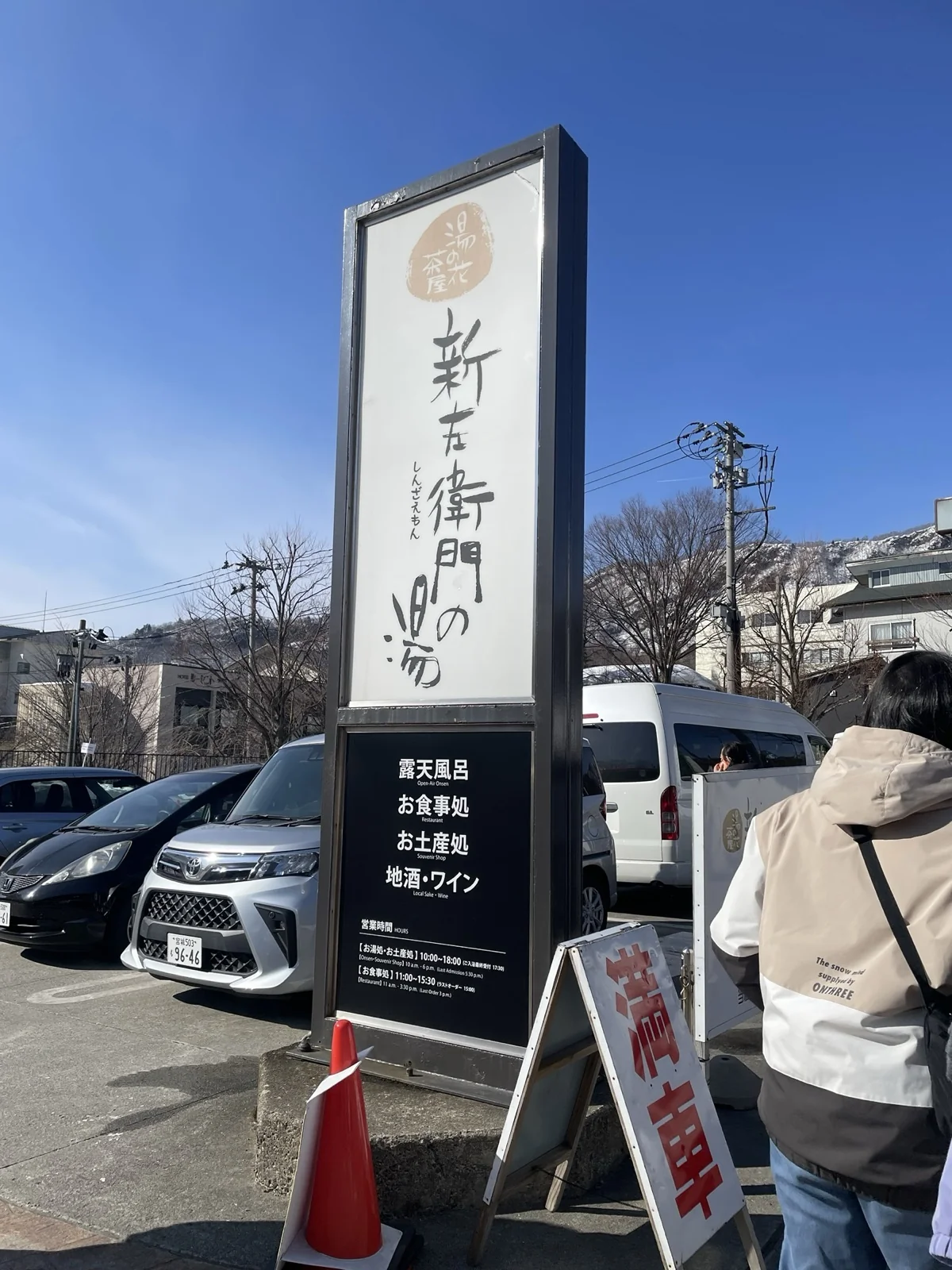
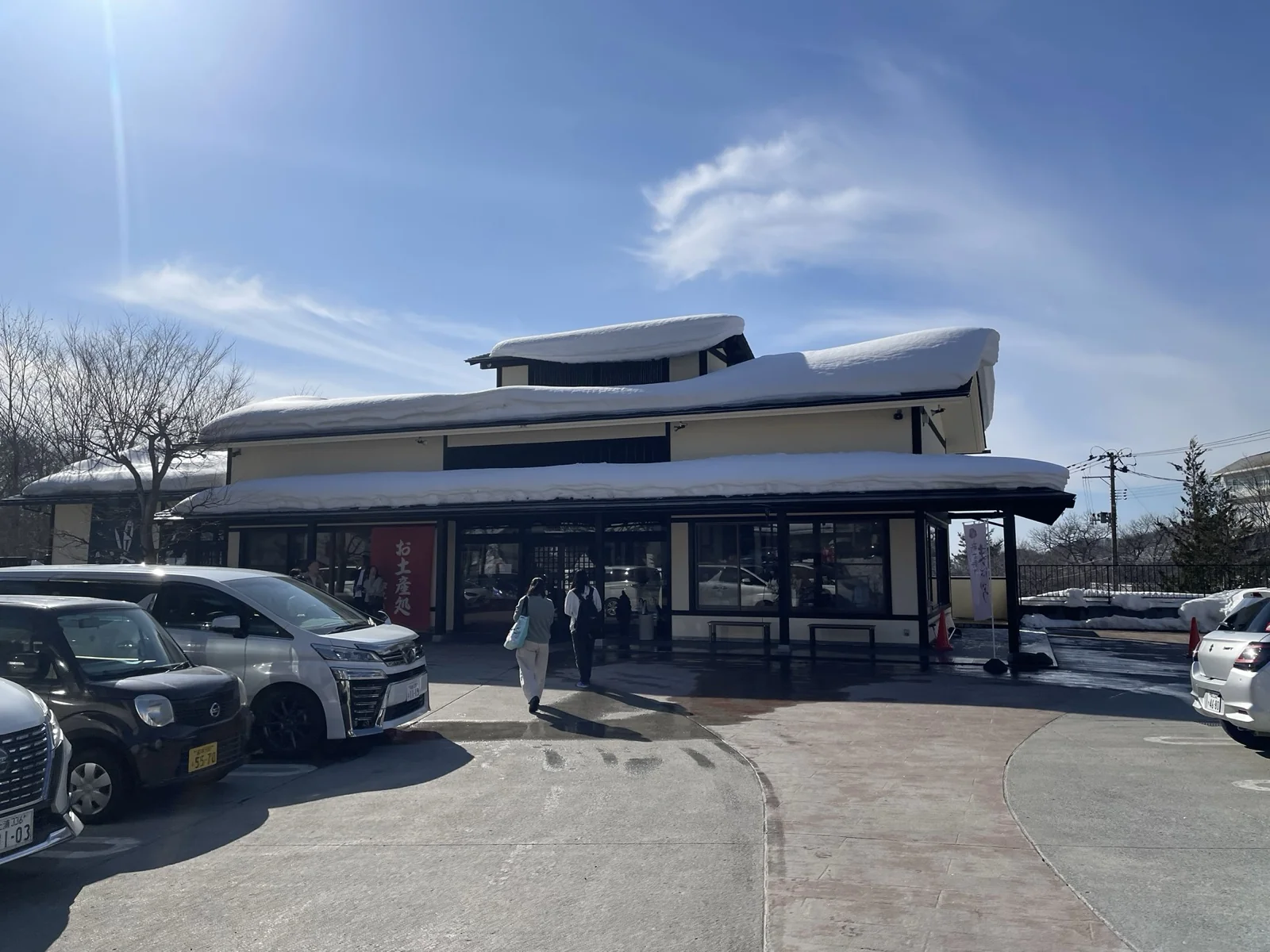
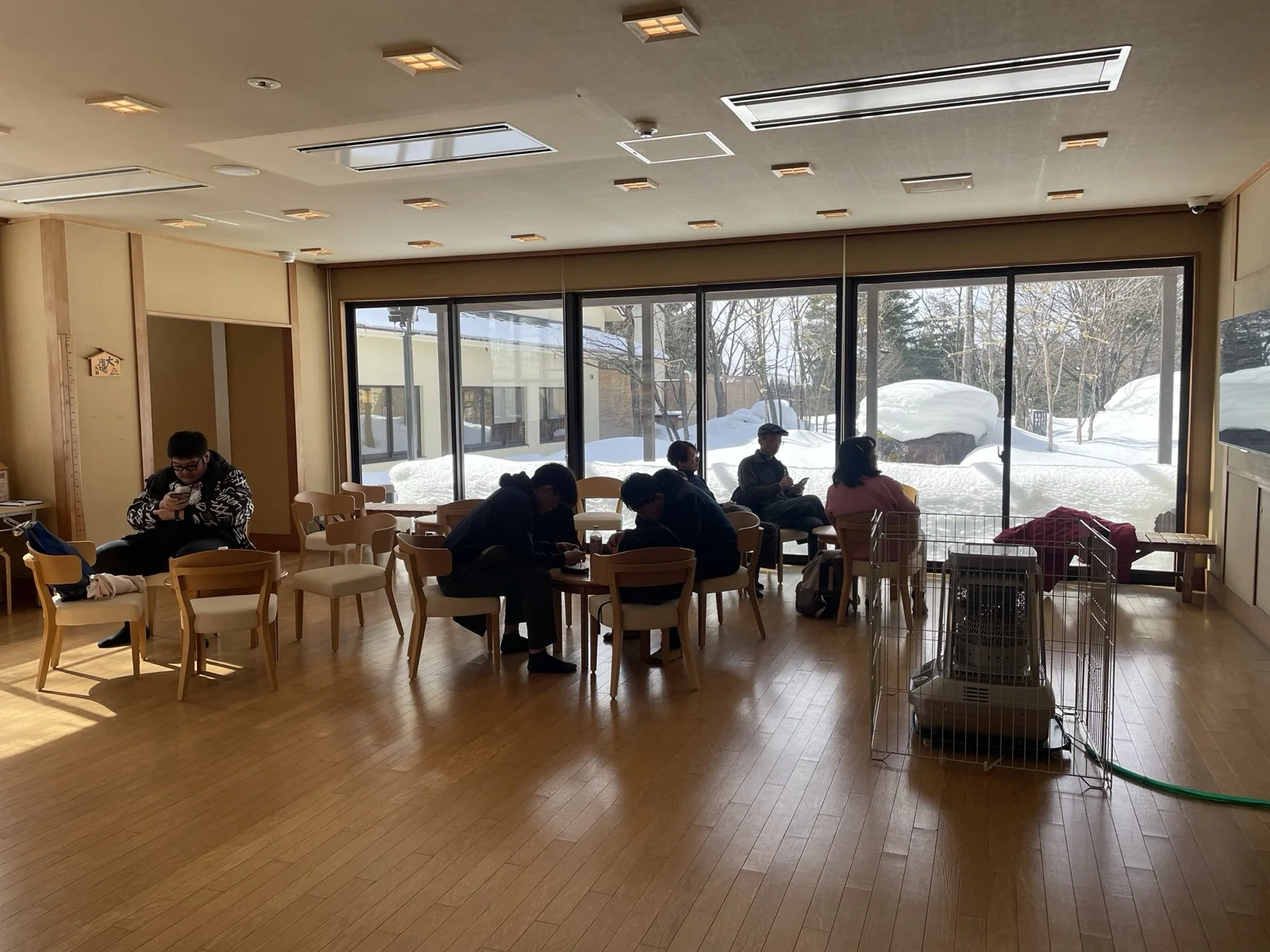
Where We Stayed in Zao: Honest Review
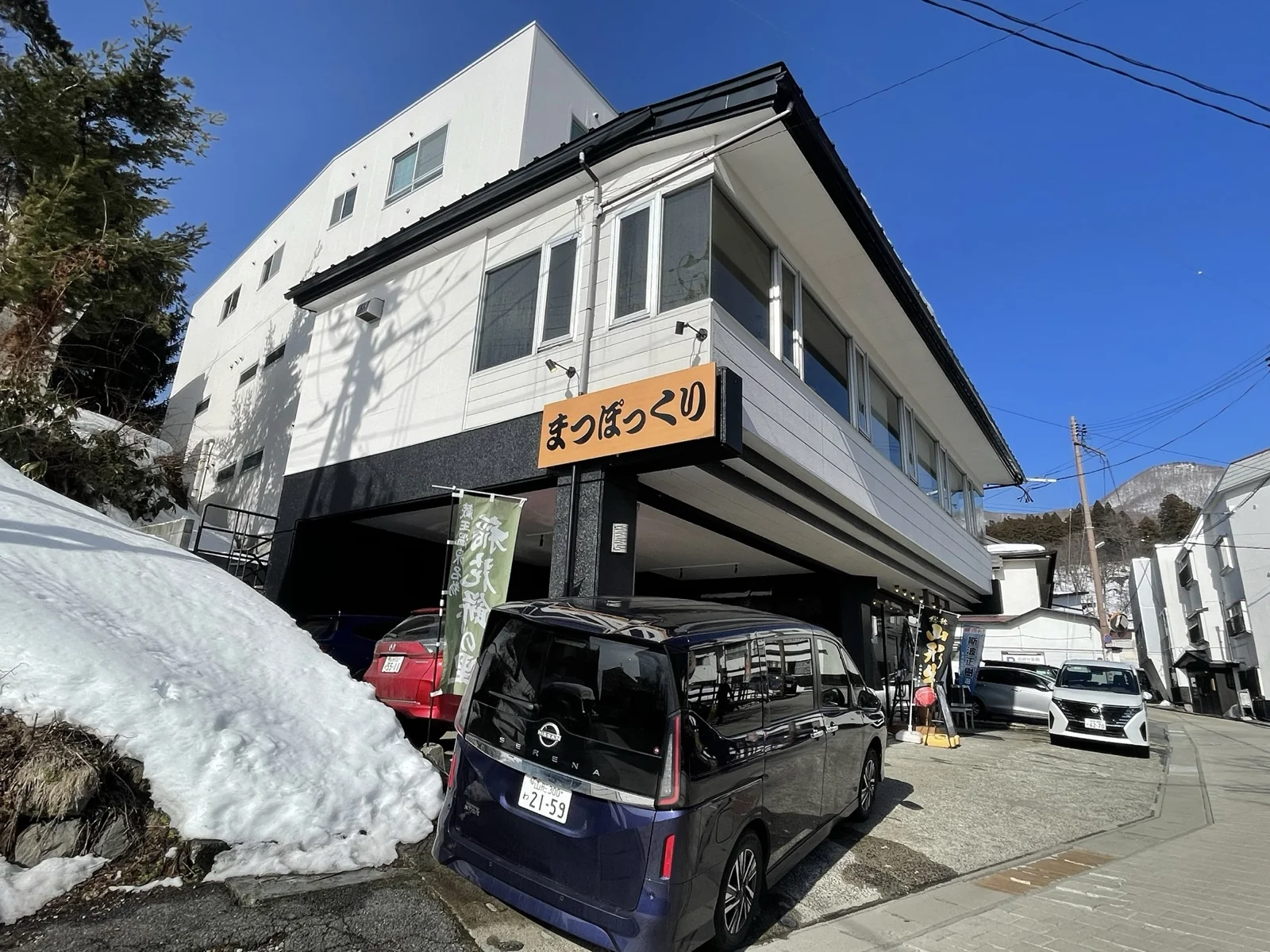
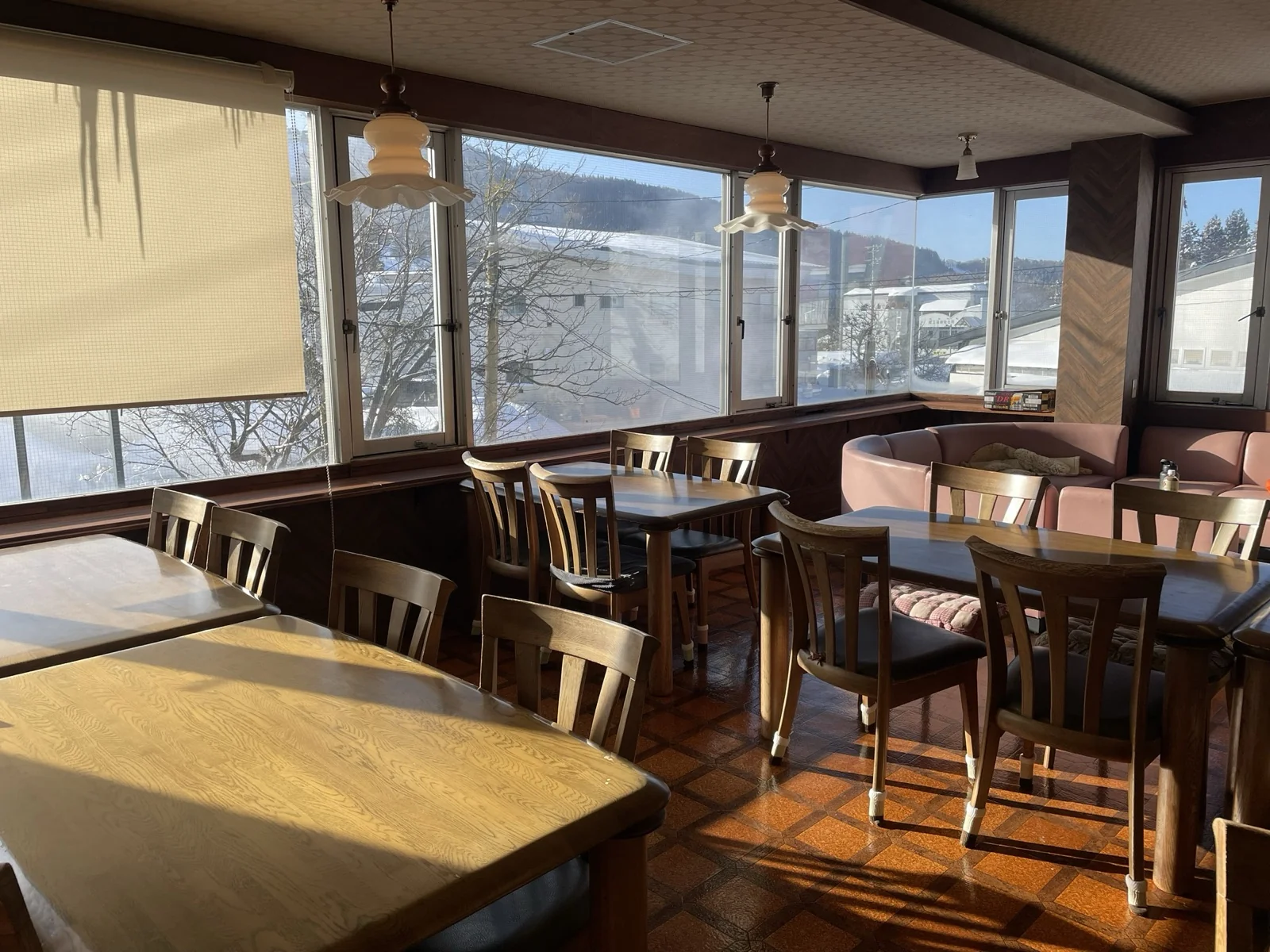
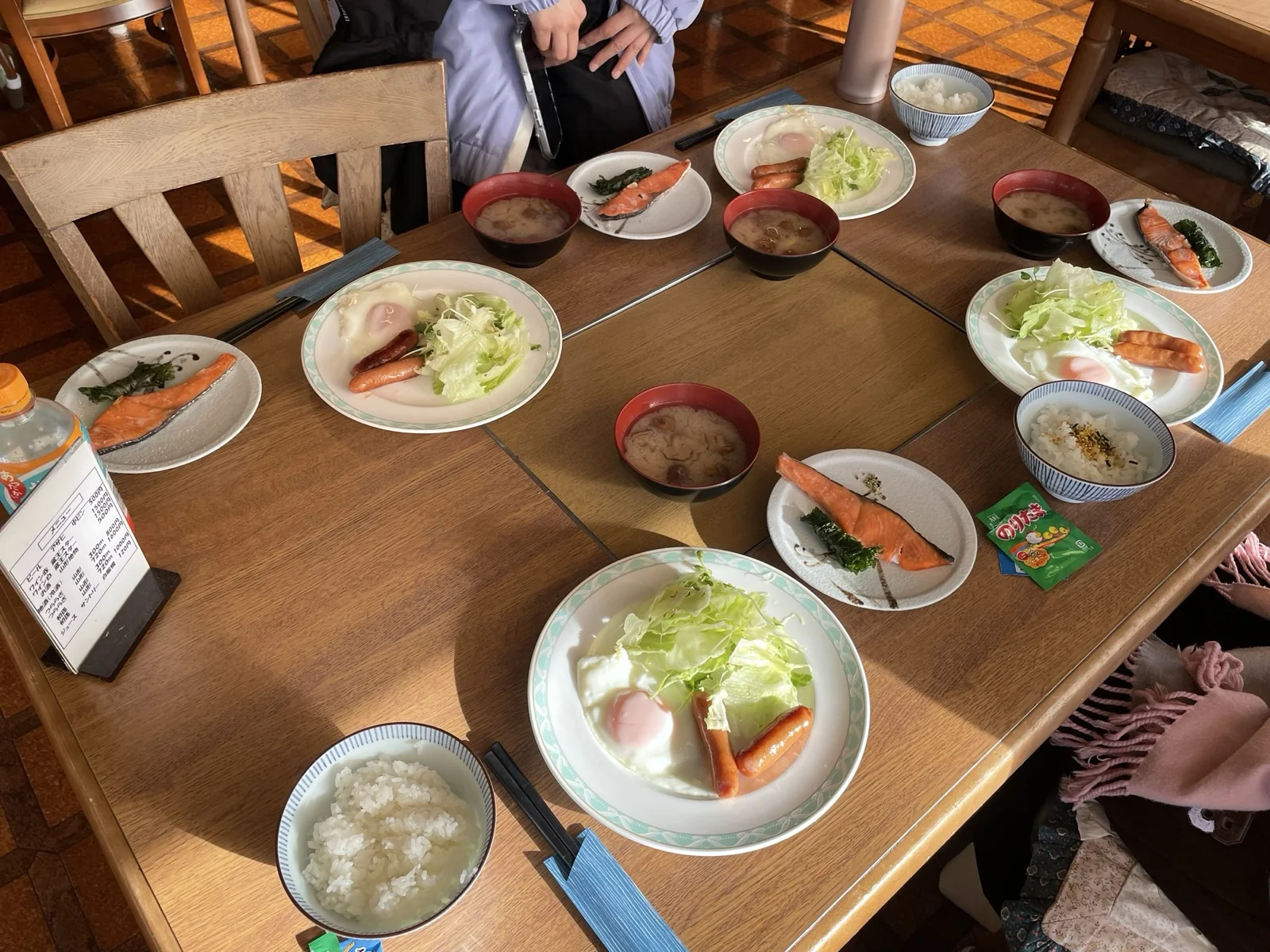
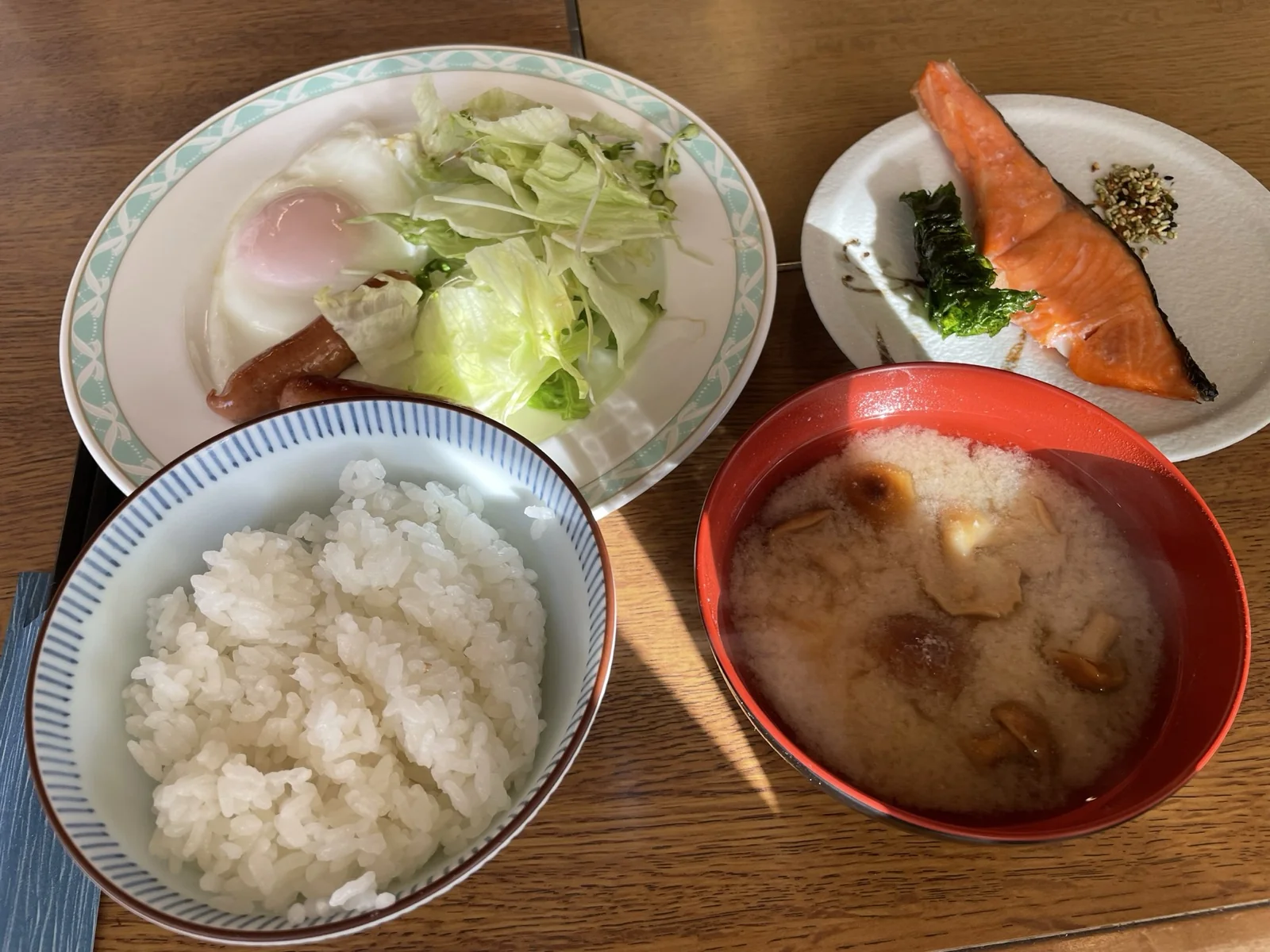
Our stay in Zao was at Matsupokkuri (Booking.com), which roughly translates to "Pinecone Lodge" (map link here). The rooms are tatami-style and you lay out your own futon. Not huge, but reasonably clean. Bathrooms are shared, though a few rooms have their own private toilet — confirm with the owner in advance. There's a gear storage area on the first floor, so if you're renting skis for multiple days, you'll have somewhere to keep them.
Honestly, we only picked this place because we booked late and it fit the budget. The upside is the convenient location — close to the bus terminal and the slopes, within about five minutes' walk of the main street. Otherwise it was perfectly average: nothing special, and nothing I'd particularly recommend.
Zao Onsen Town: Sightseeing & Food
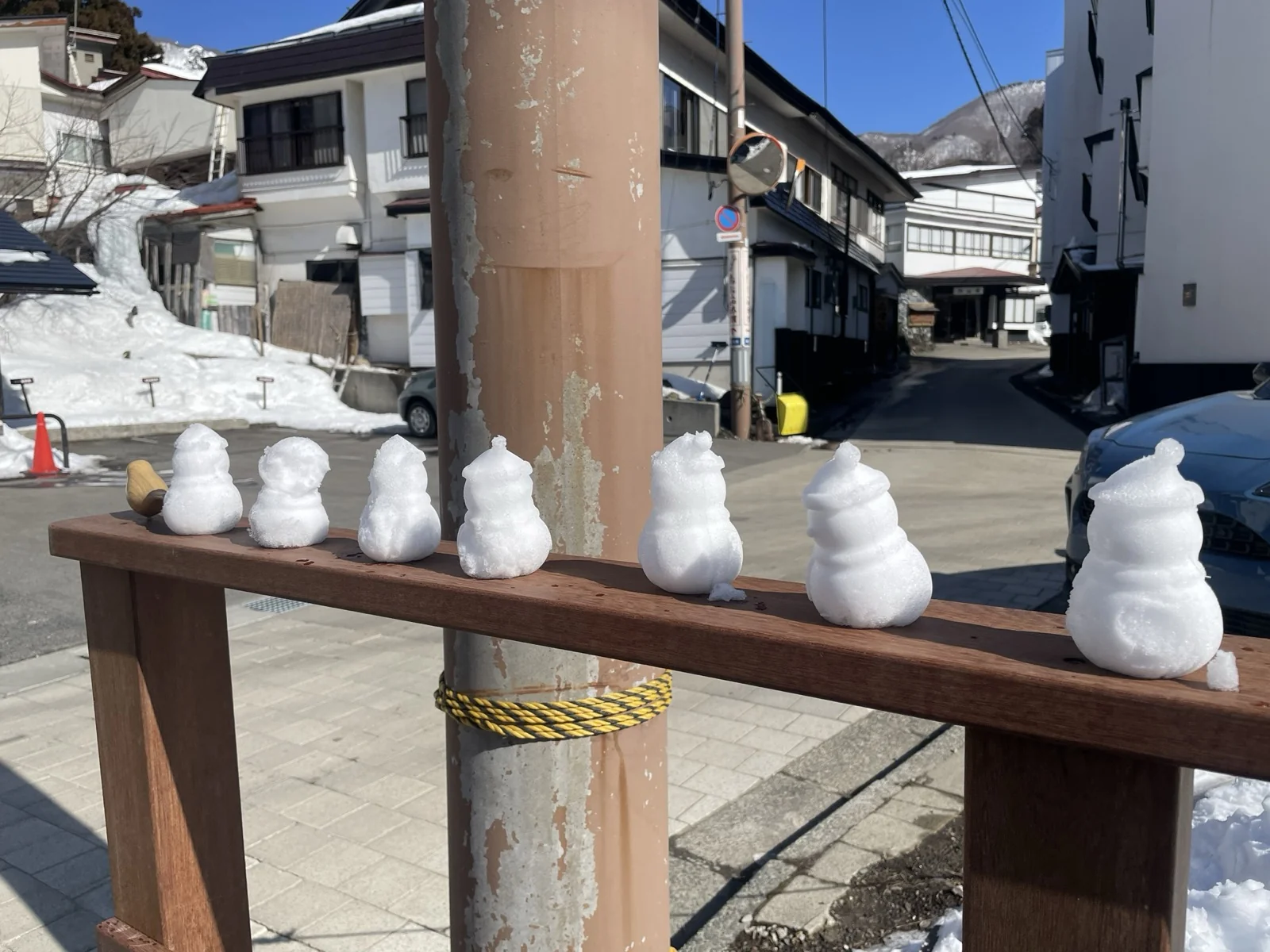
Zao's town center is tiny and the whole village is basically one big tourist area. Beyond the larger shrine and Sakazuki Lake, it's fun to wander the little side streets and browse the shops — you'll find all sorts of cleverly designed goods, perfect for picking up souvenirs and gifts to bring home.
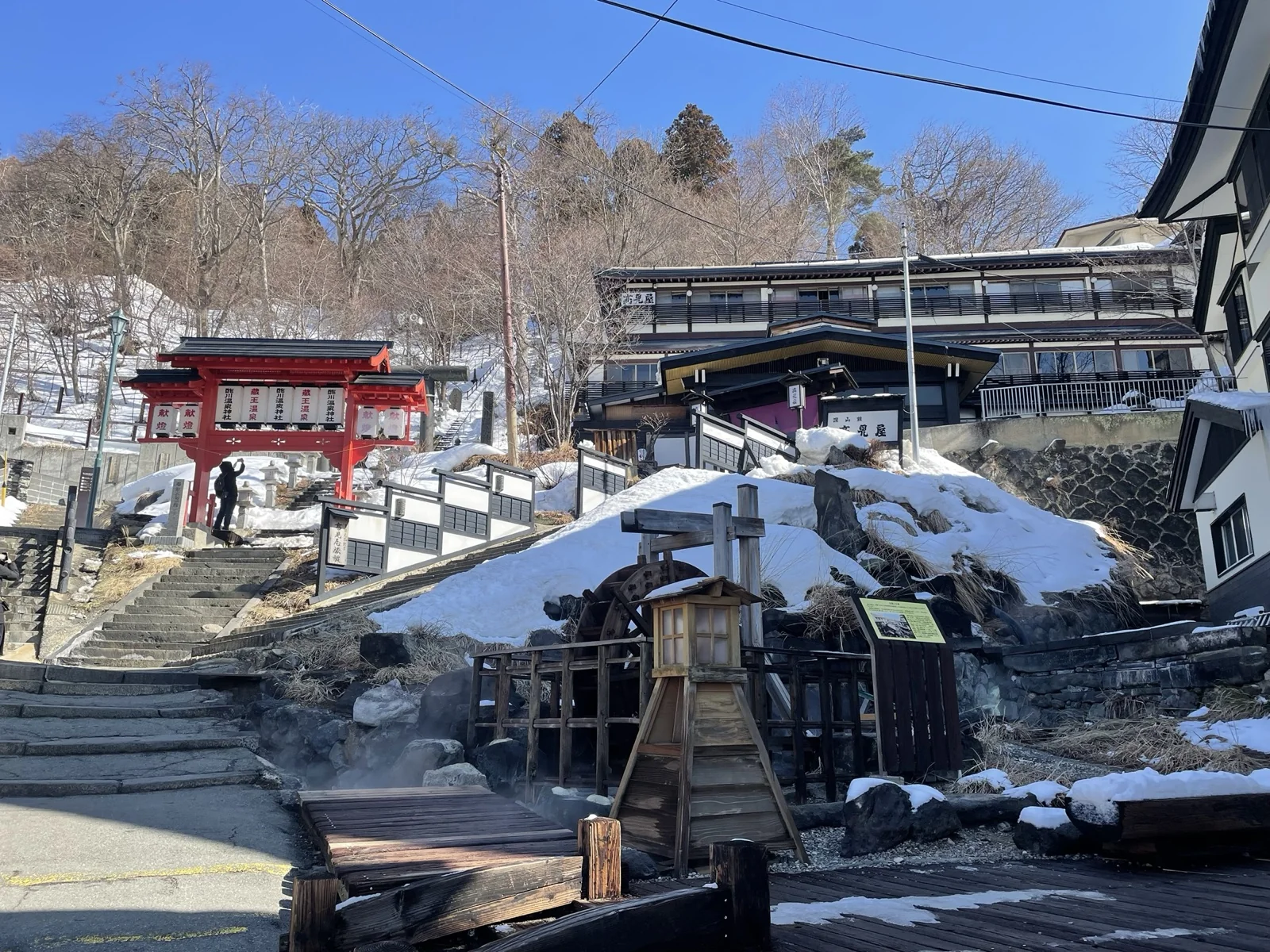
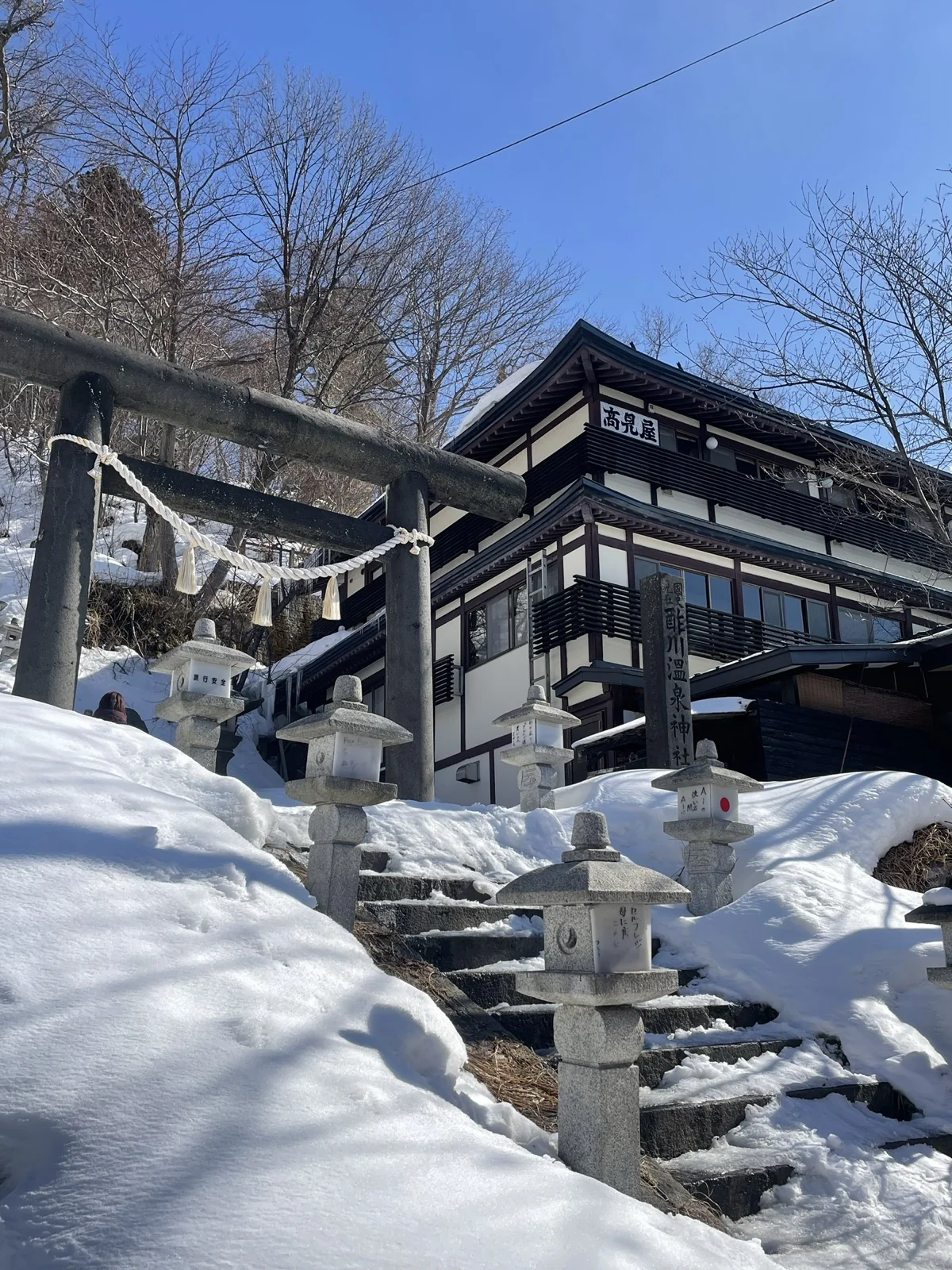
Sukawa Onsen Shrine Approach (酢川温泉神社)
Sukawa Onsen Shrine Approach is one of the bigger sights here, but the stairs were sheets of ice and hard to walk on, so we looked around, snapped some photos, and moved on.
Sakazuki Lake (盃湖)
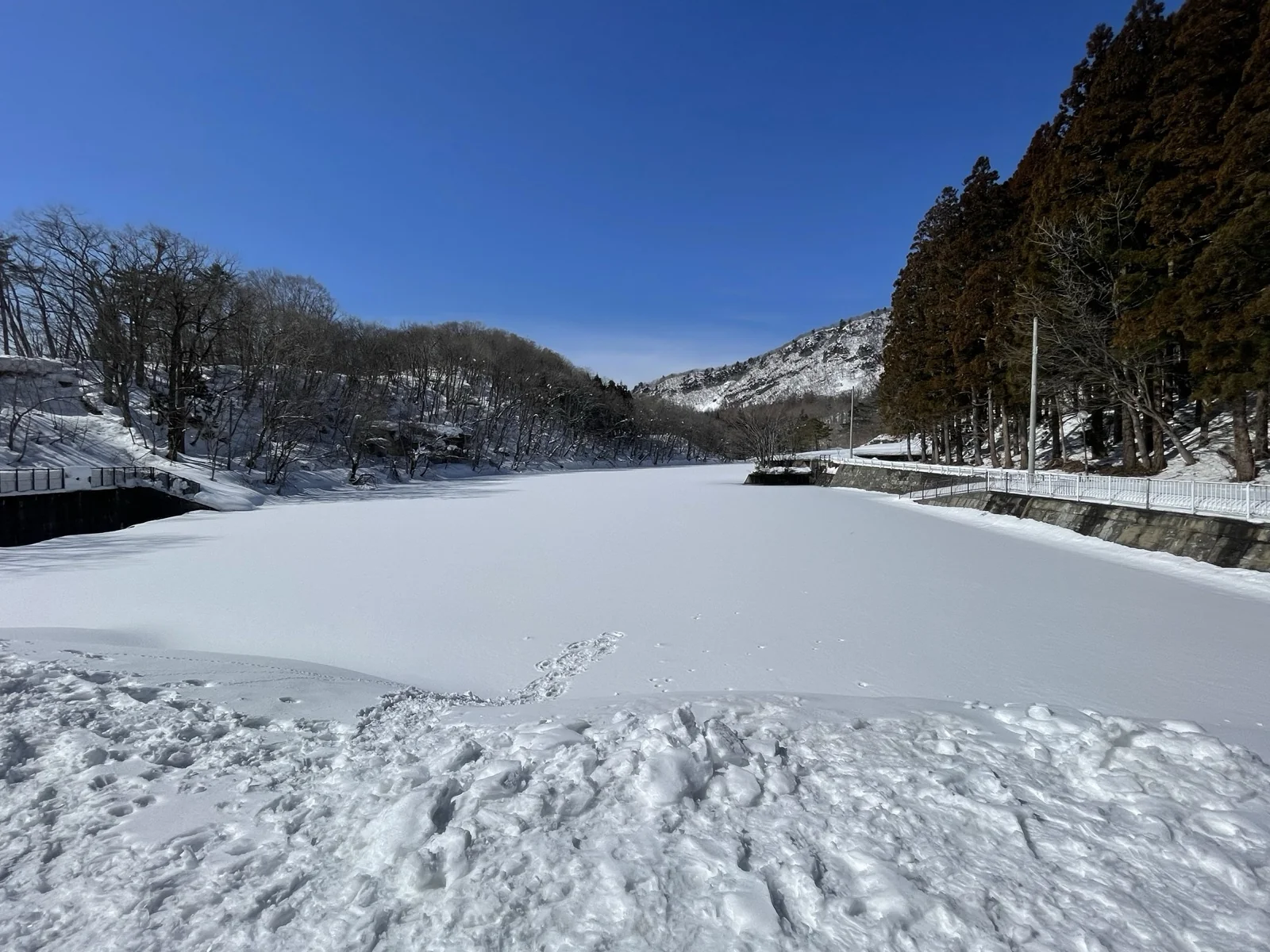
Seeing Sakazuki Lake completely frozen over was stunning — it was my first time seeing an entire lake sealed under ice. We didn't dare walk out on it, though, for fear the ice might crack and drop us in.
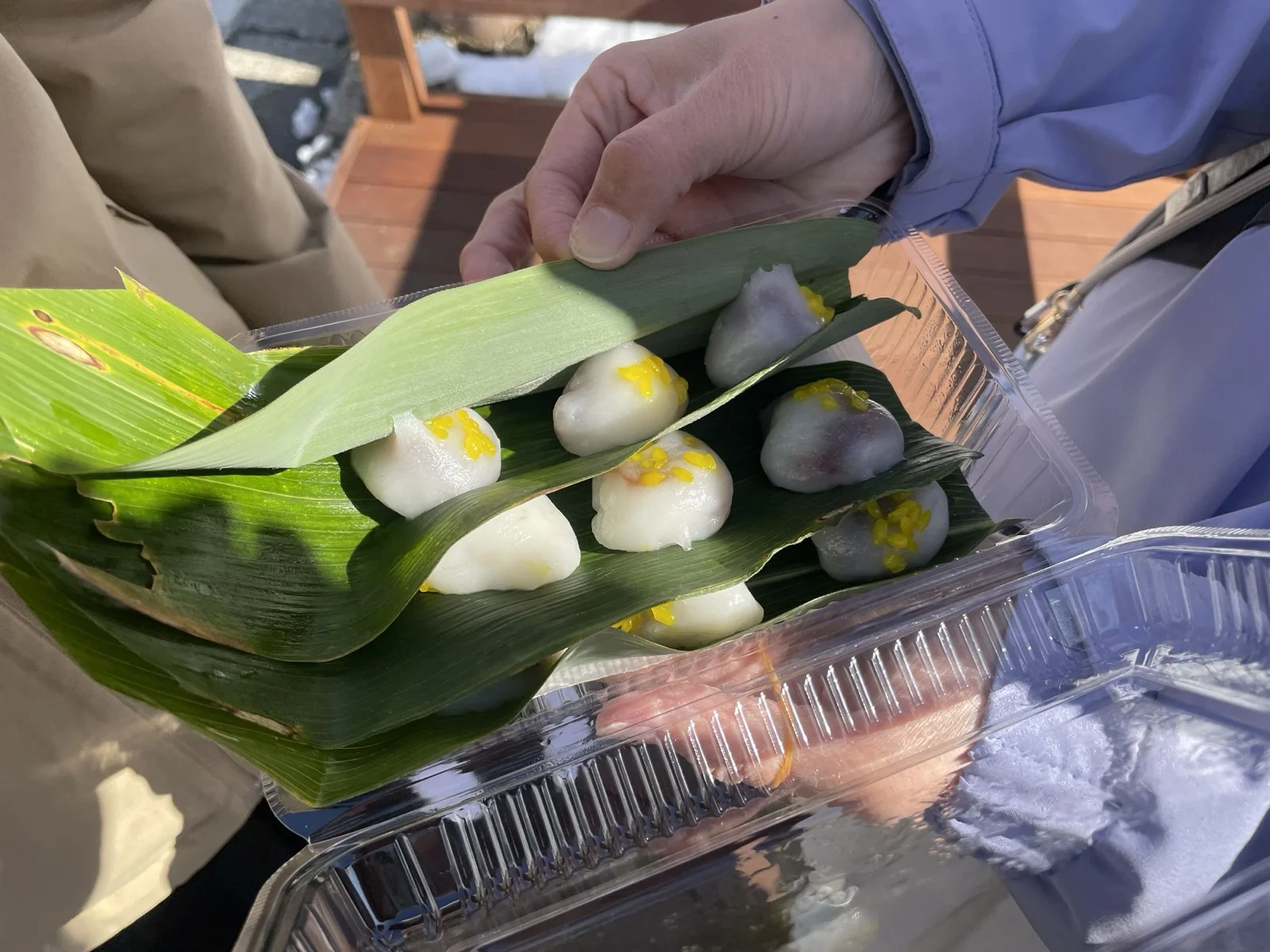
Inagamochi Rice Cakes (稻花餅)
Inagamochi are little red-bean-filled mochi wrapped in sasa bamboo leaves and topped with yellow grains of rice. Originally offerings to the gods to pray for a bountiful harvest, they later became one of Zao's famous specialties. They're a delicious snack, but with such a short shelf life you generally eat them on the spot — they don't work as take-home gifts.
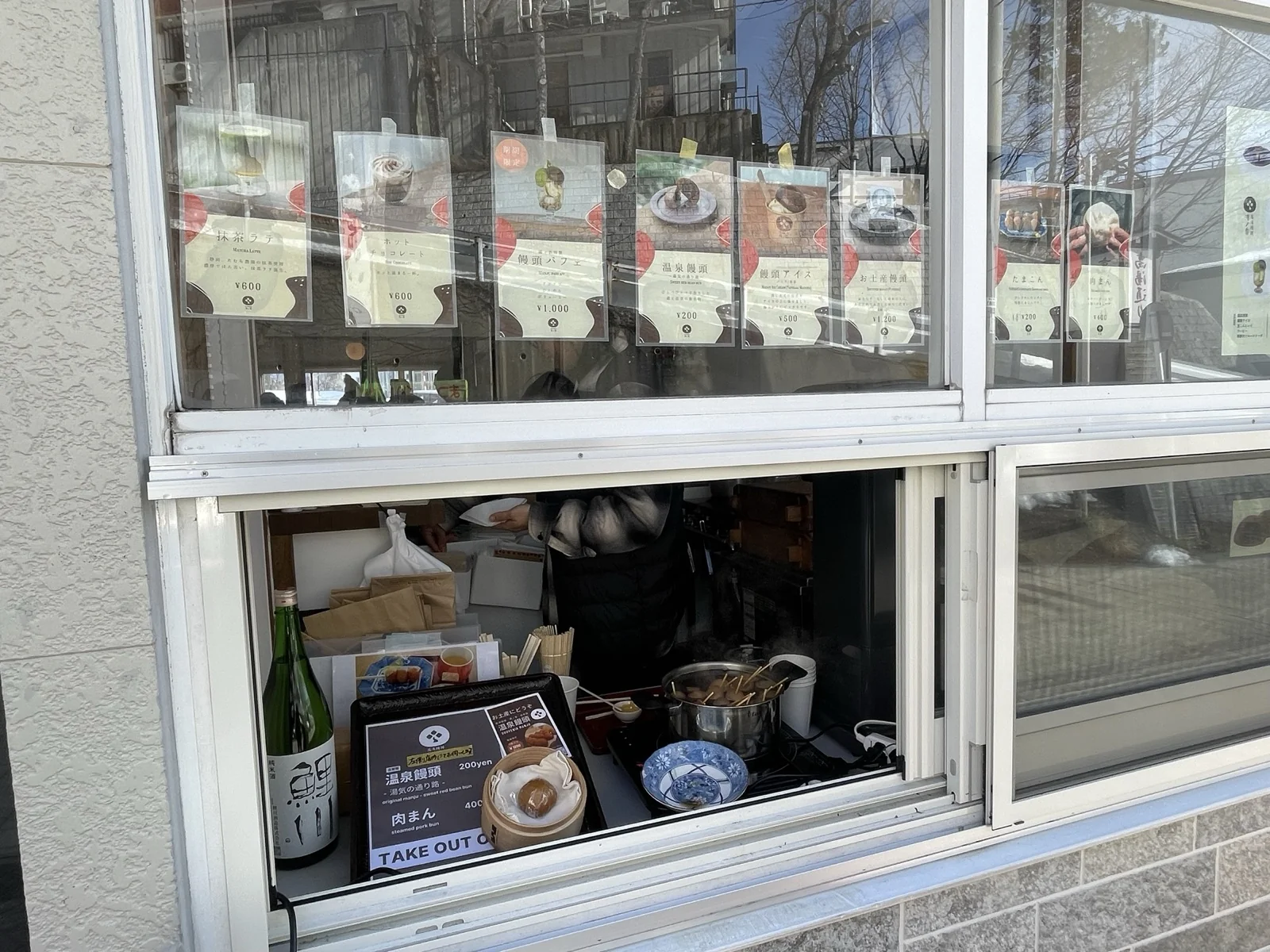
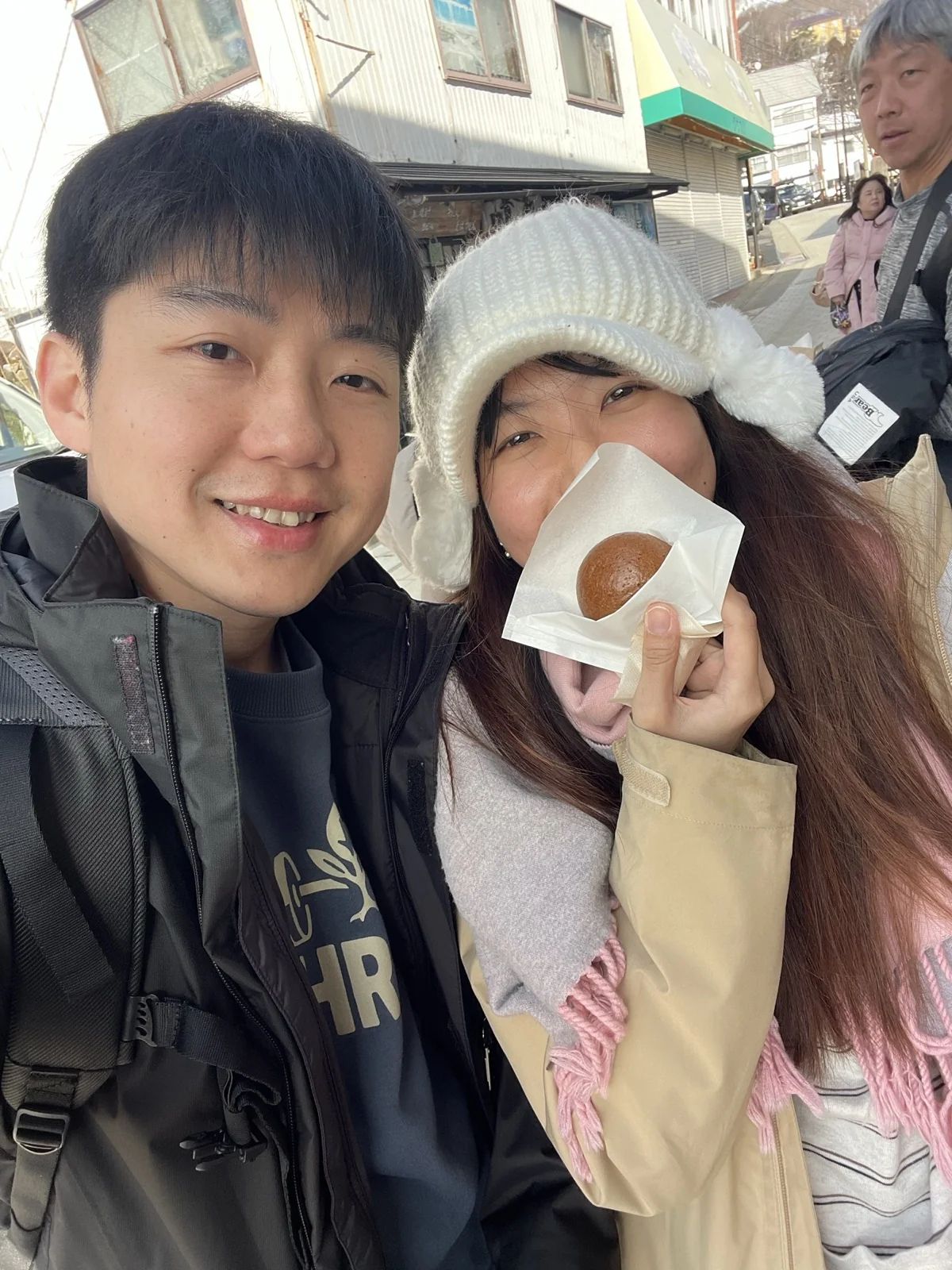
Onsen Manju (Hot Spring Buns)
In Japanese anime, characters always seem to snack on onsen manju after a hot spring soak. This shop is near the bus terminal — to me they taste like brown-sugar bun dough wrapped around red bean paste. Another pretty tasty little treat!
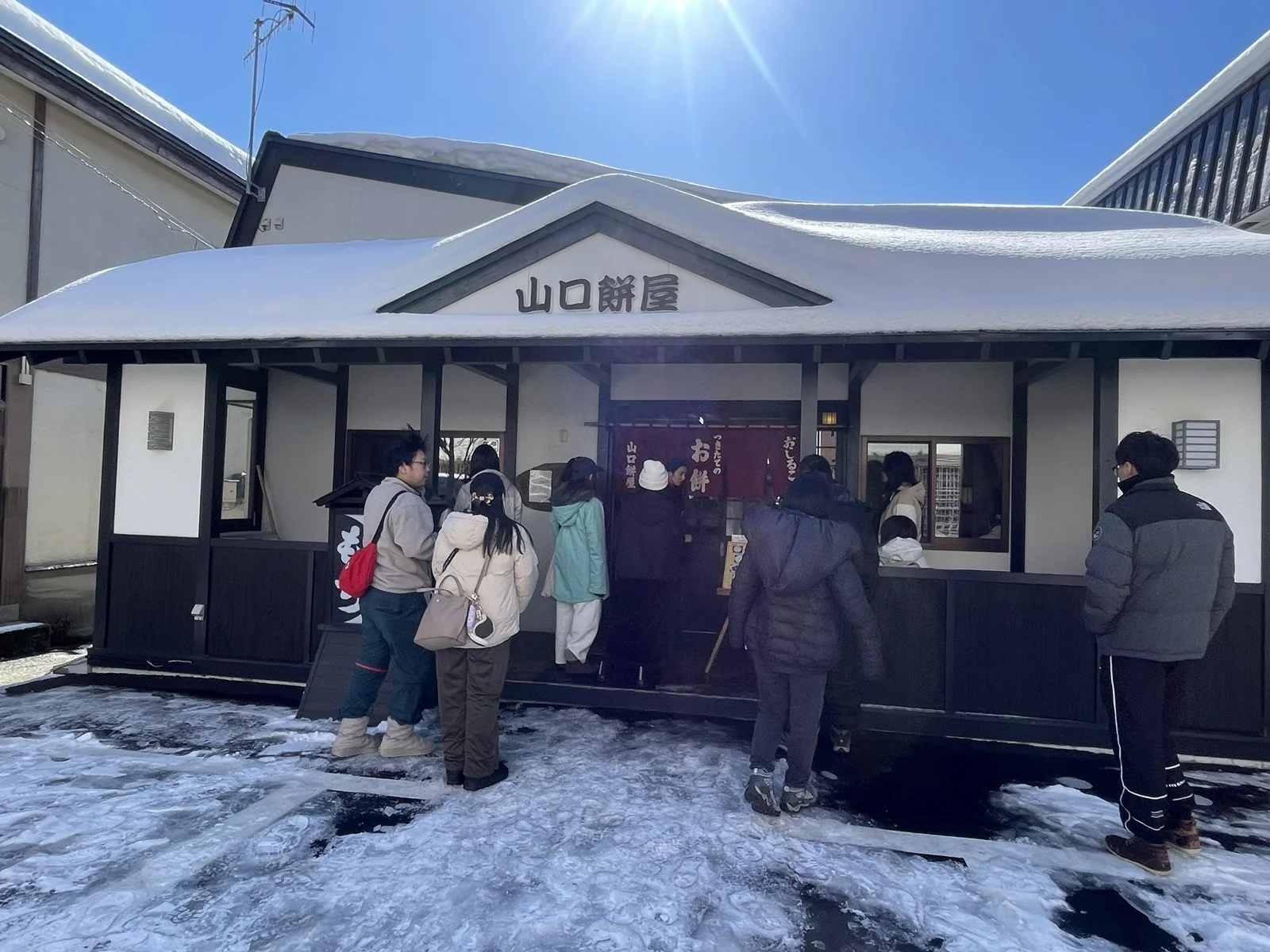
Yamaguchi Mochi Shop (山口餅屋)
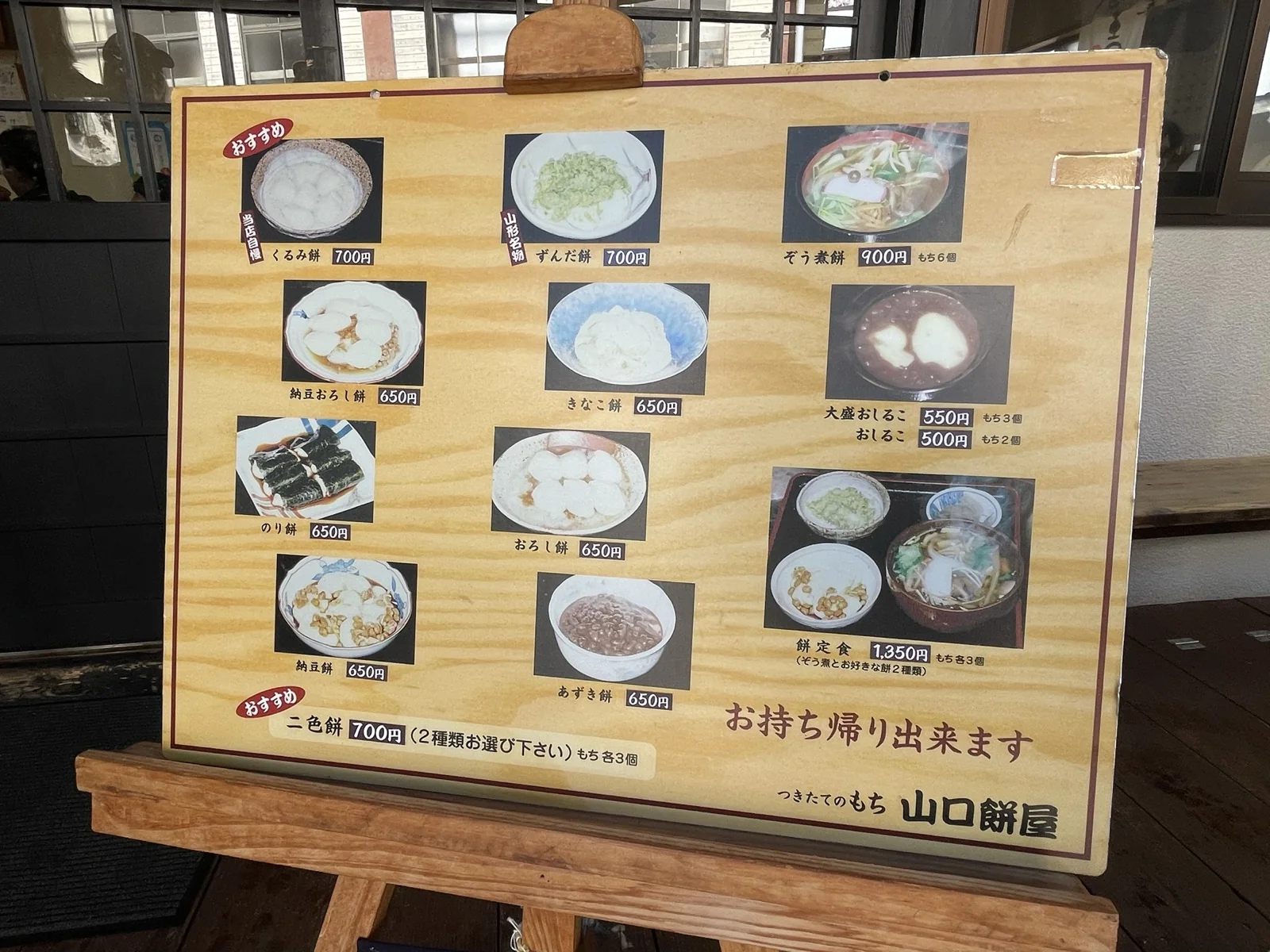
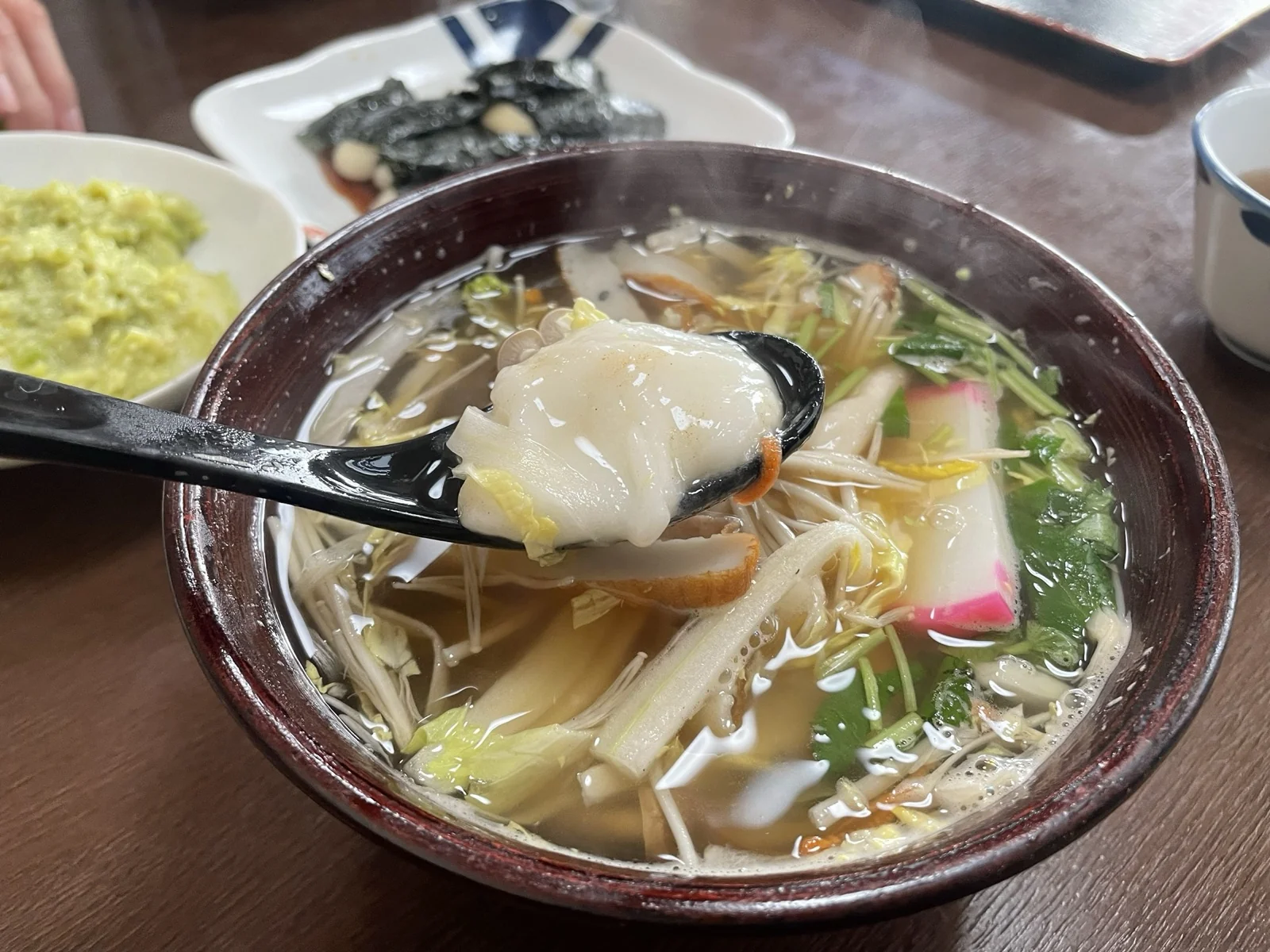
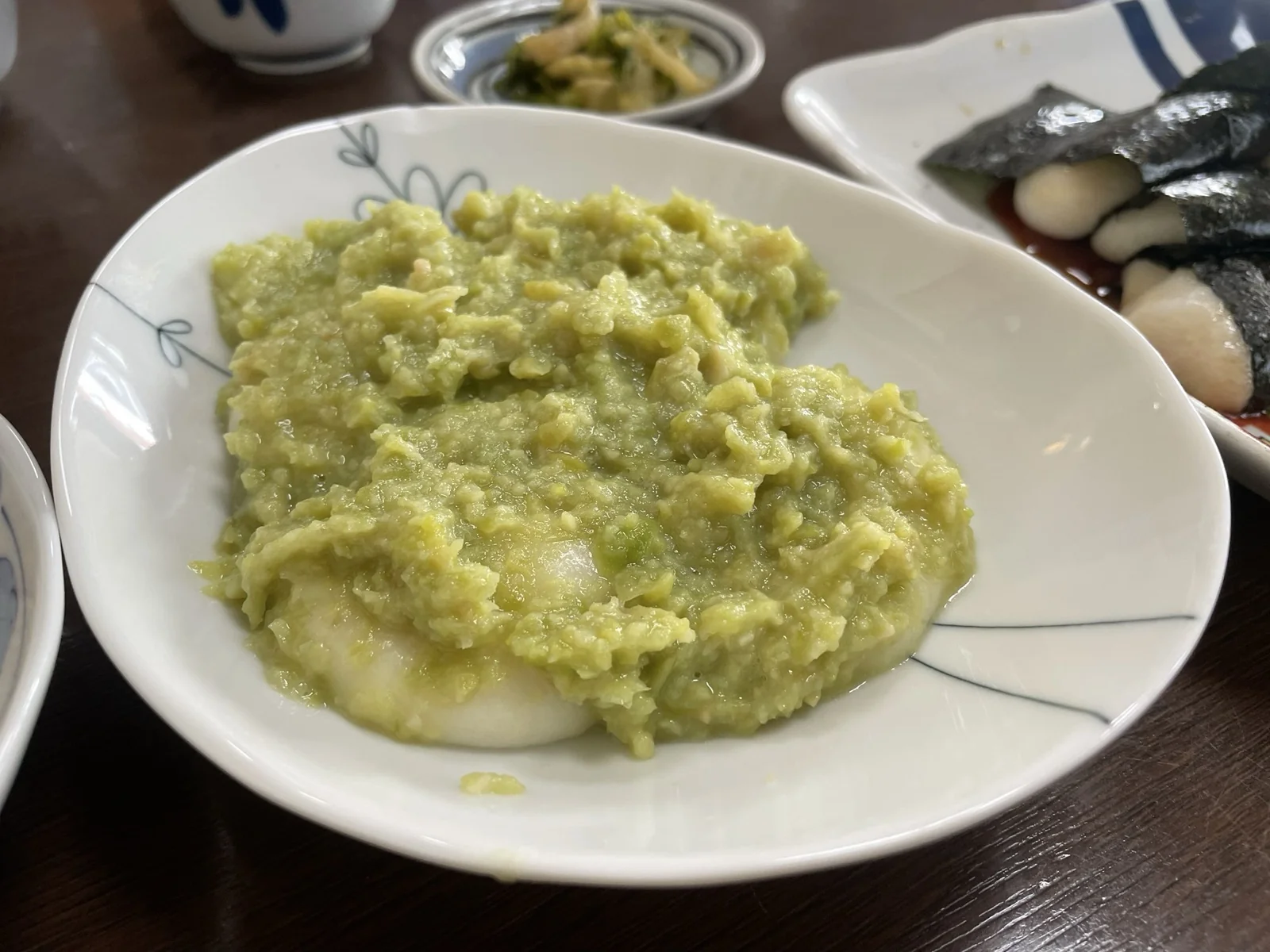
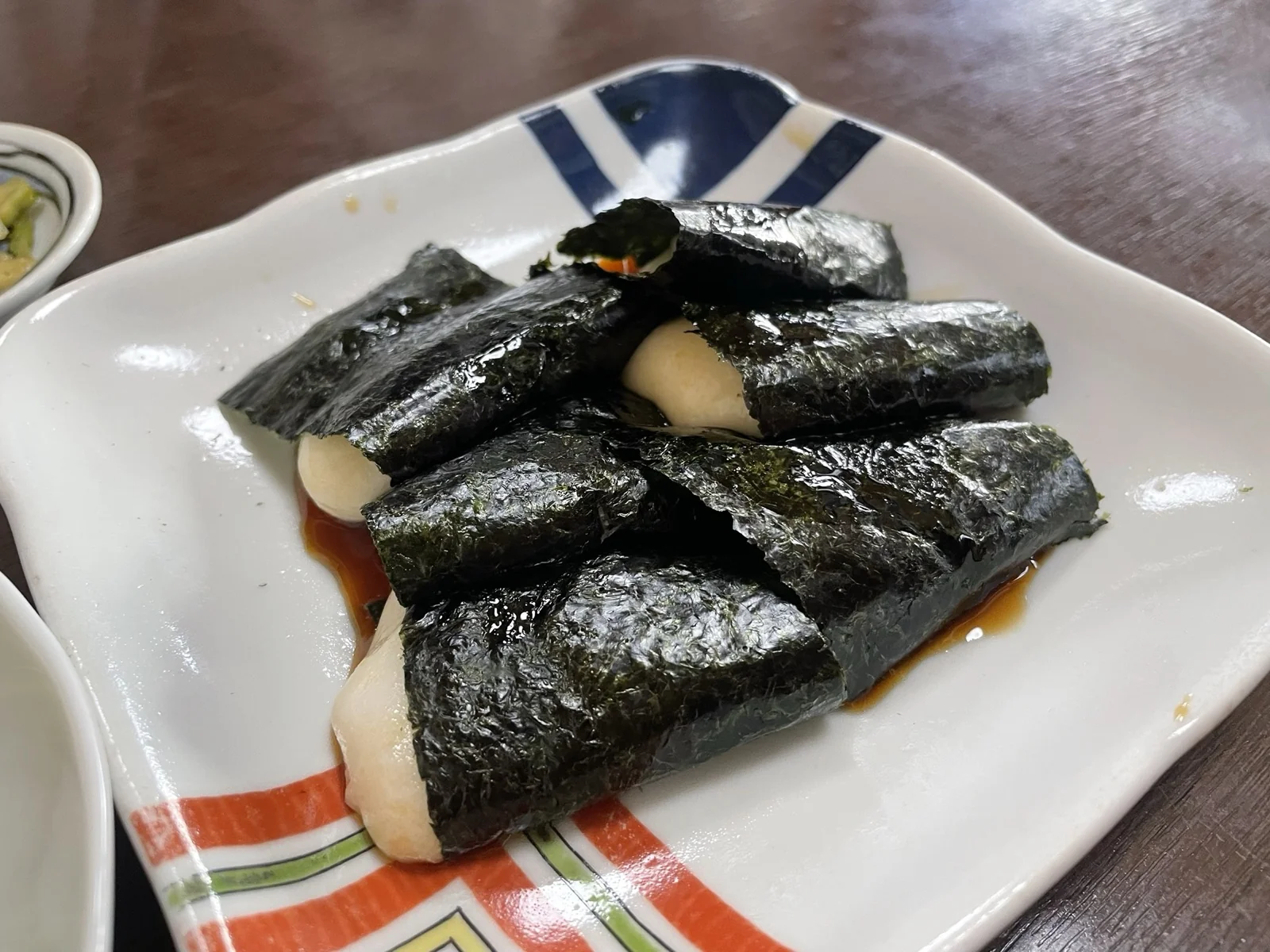
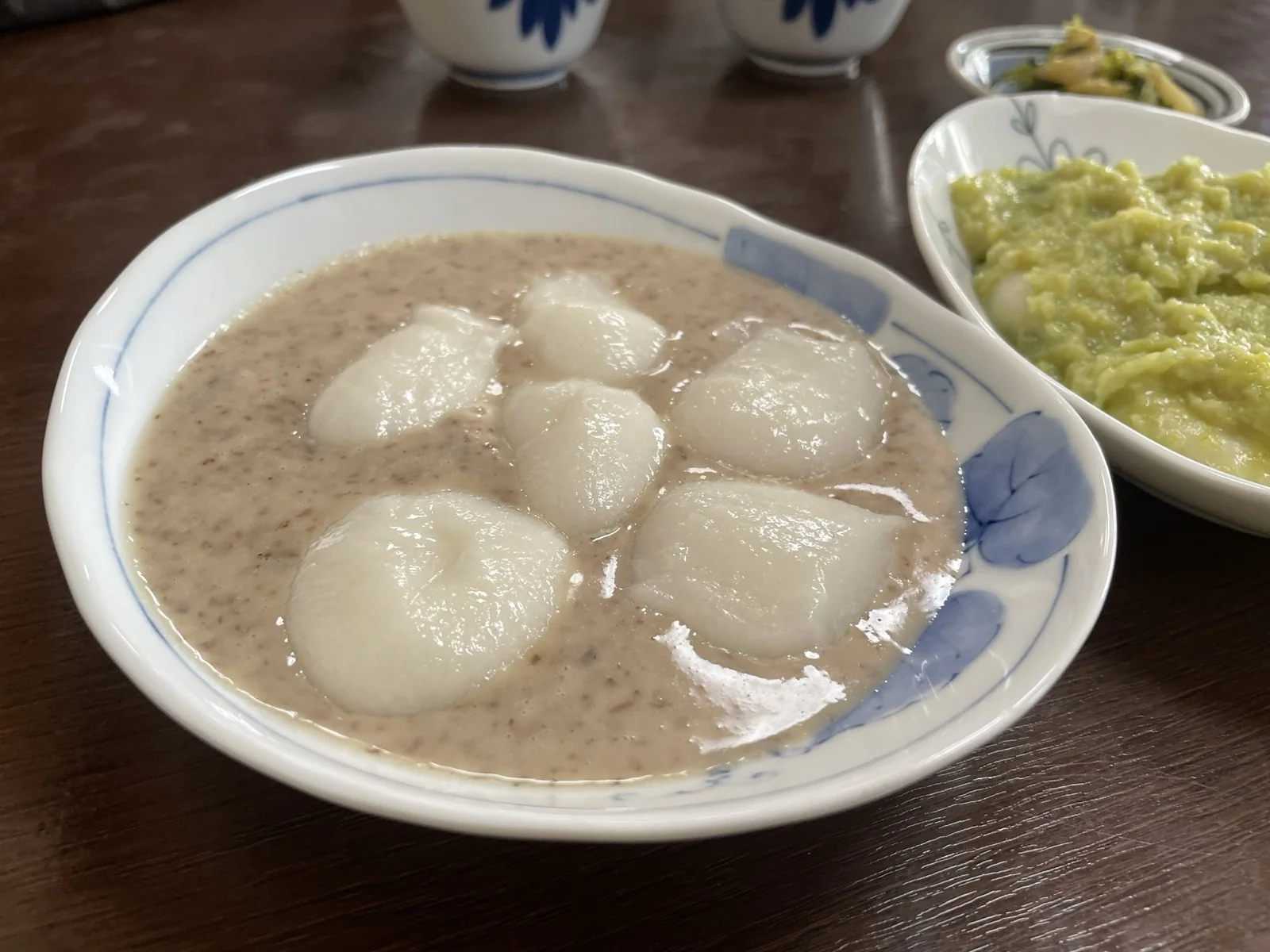
The locally famous Yamaguchi Mochi Shop (山口餅屋) (map link here) specializes in all kinds of freshly made mochi, both sweet and savory. Each order comes with six pieces, so order different flavors and share them around. I highly recommend this place — especially the savory mochi soup with its bonito broth. A bowl of hot mochi soup on a freezing day is pure happiness.
Zao Onsen Shokudo (Sukiyaki)
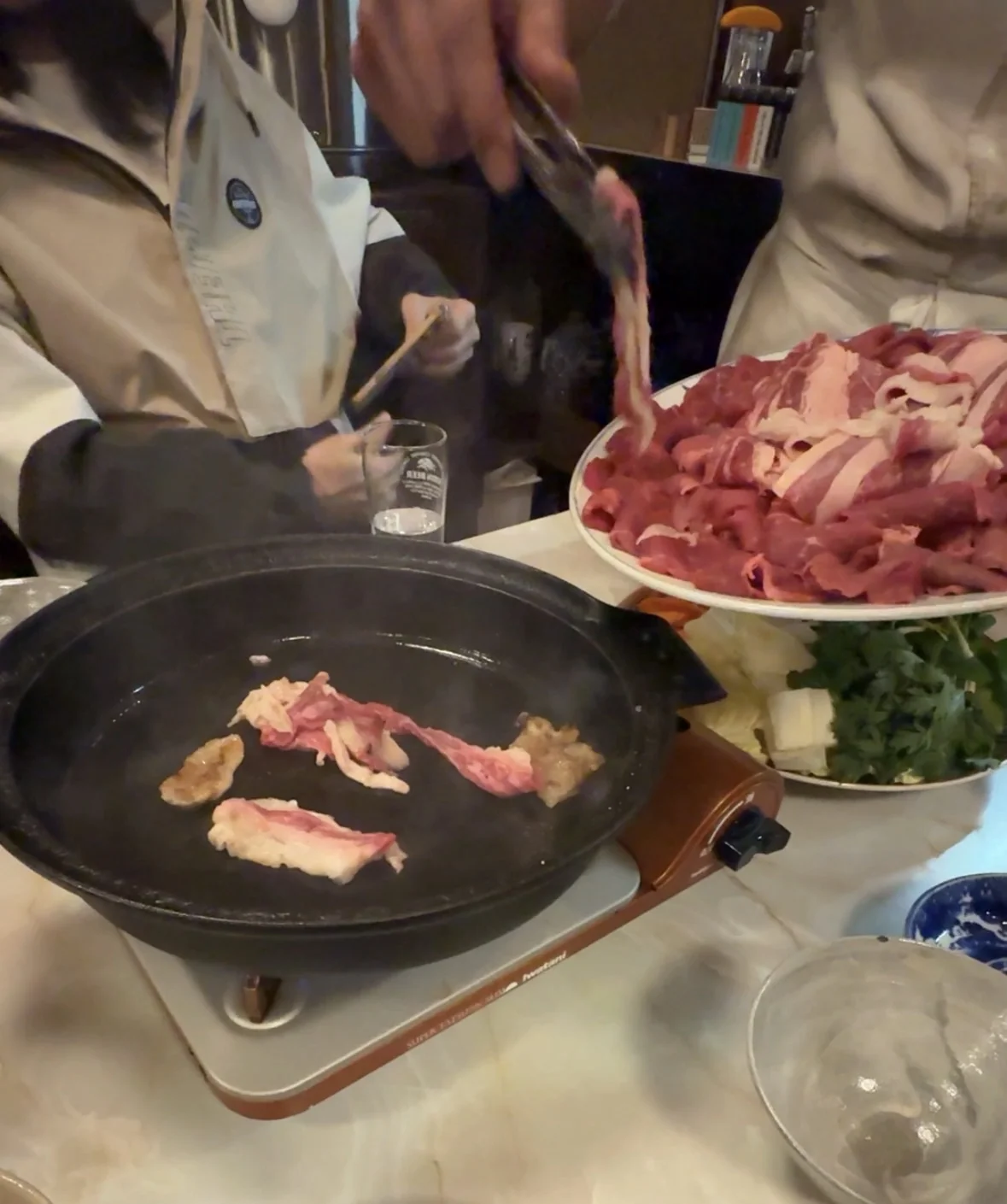
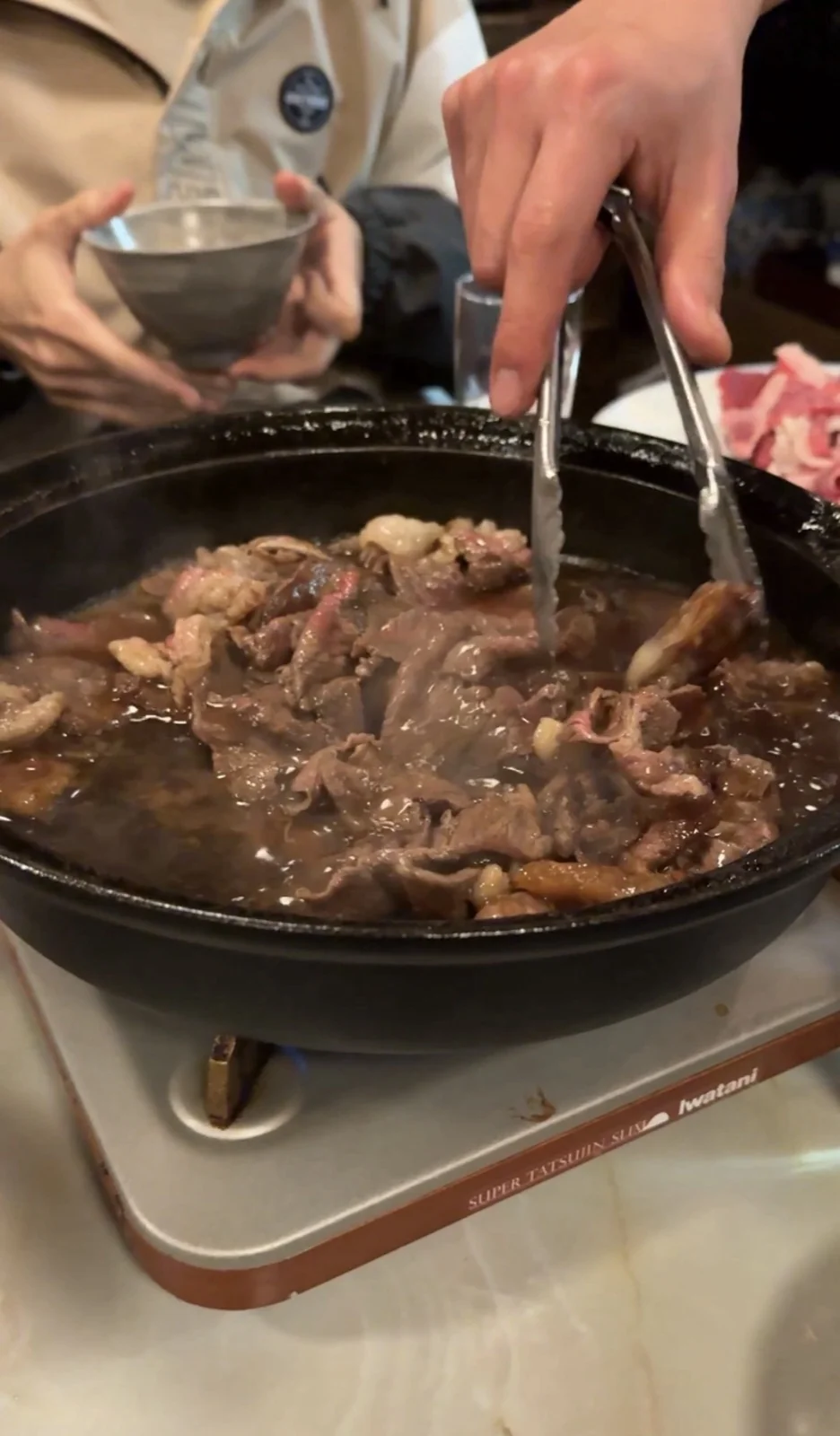
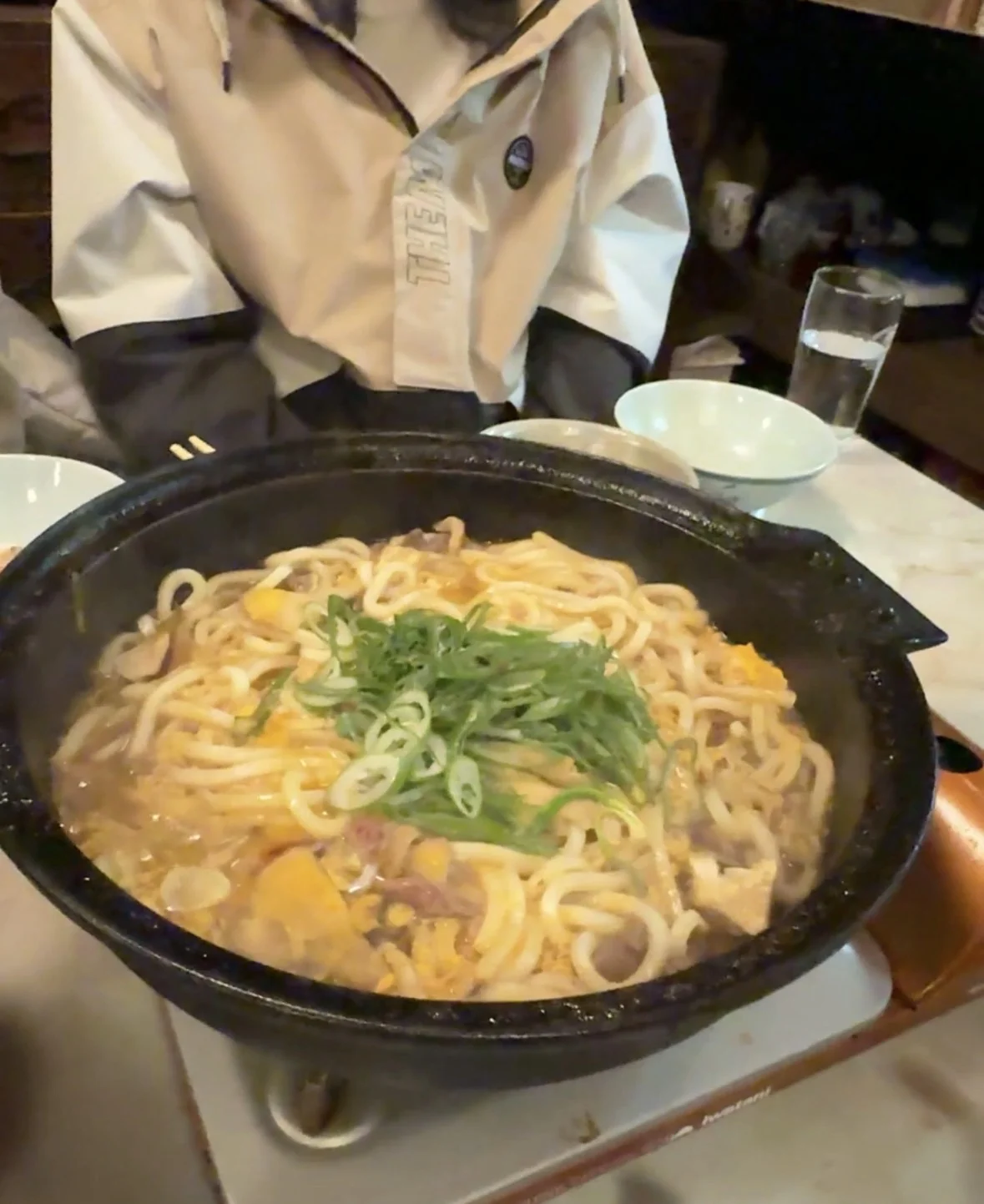
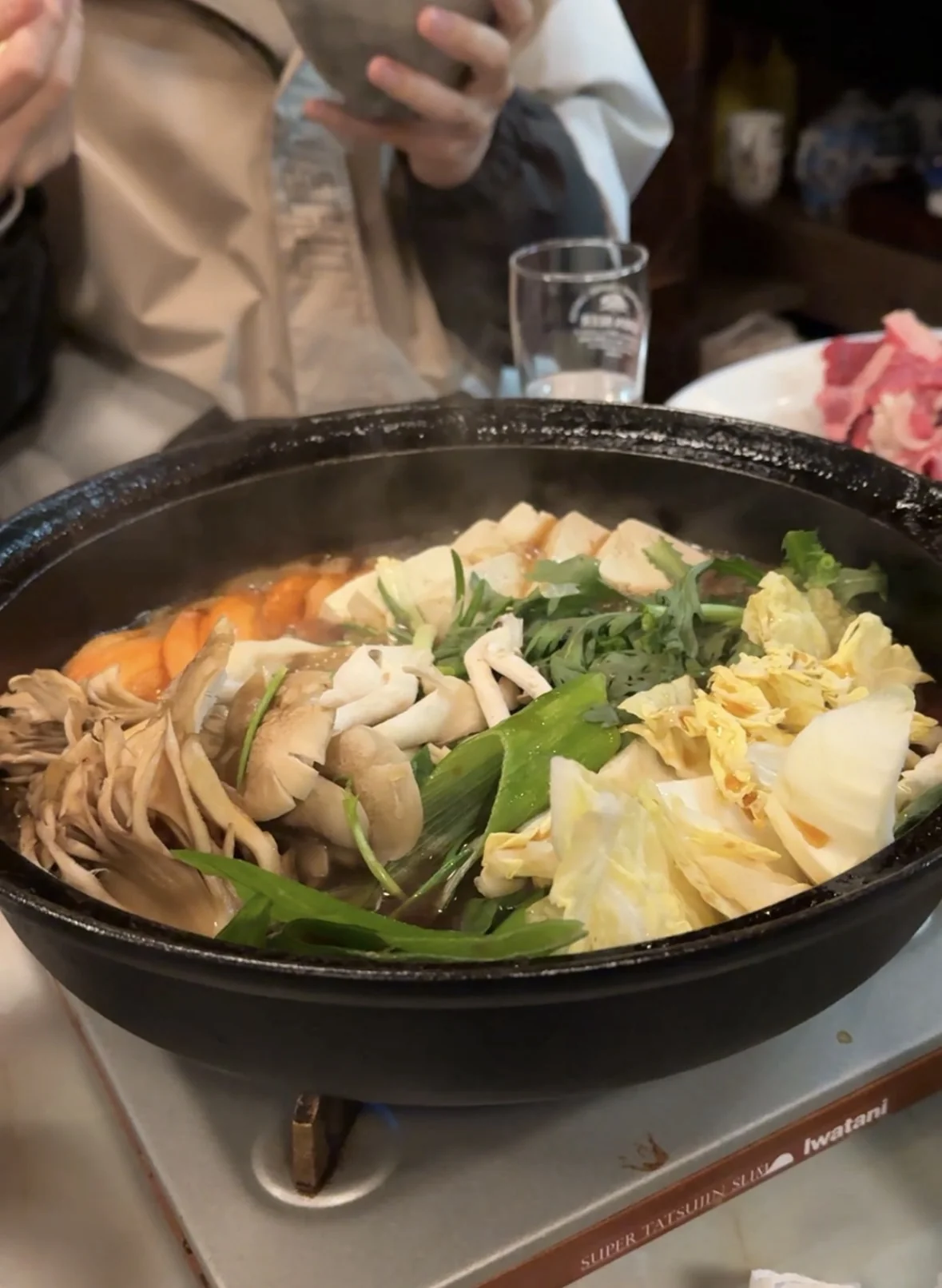
Zao Onsen Shokudo (map link here) serves sukiyaki made with Zao beef and Yamagata beef, and sukiyaki on a freezing cold day is just wonderful. In Japan, you typically finish the meal by adding udon noodles to soak up the rich leftover broth — we left completely stuffed.
It's not cheap, though — the four of us spent about NT$8,000 on this meal. But since dinner options in Zao are limited, it's still an acceptable choice.
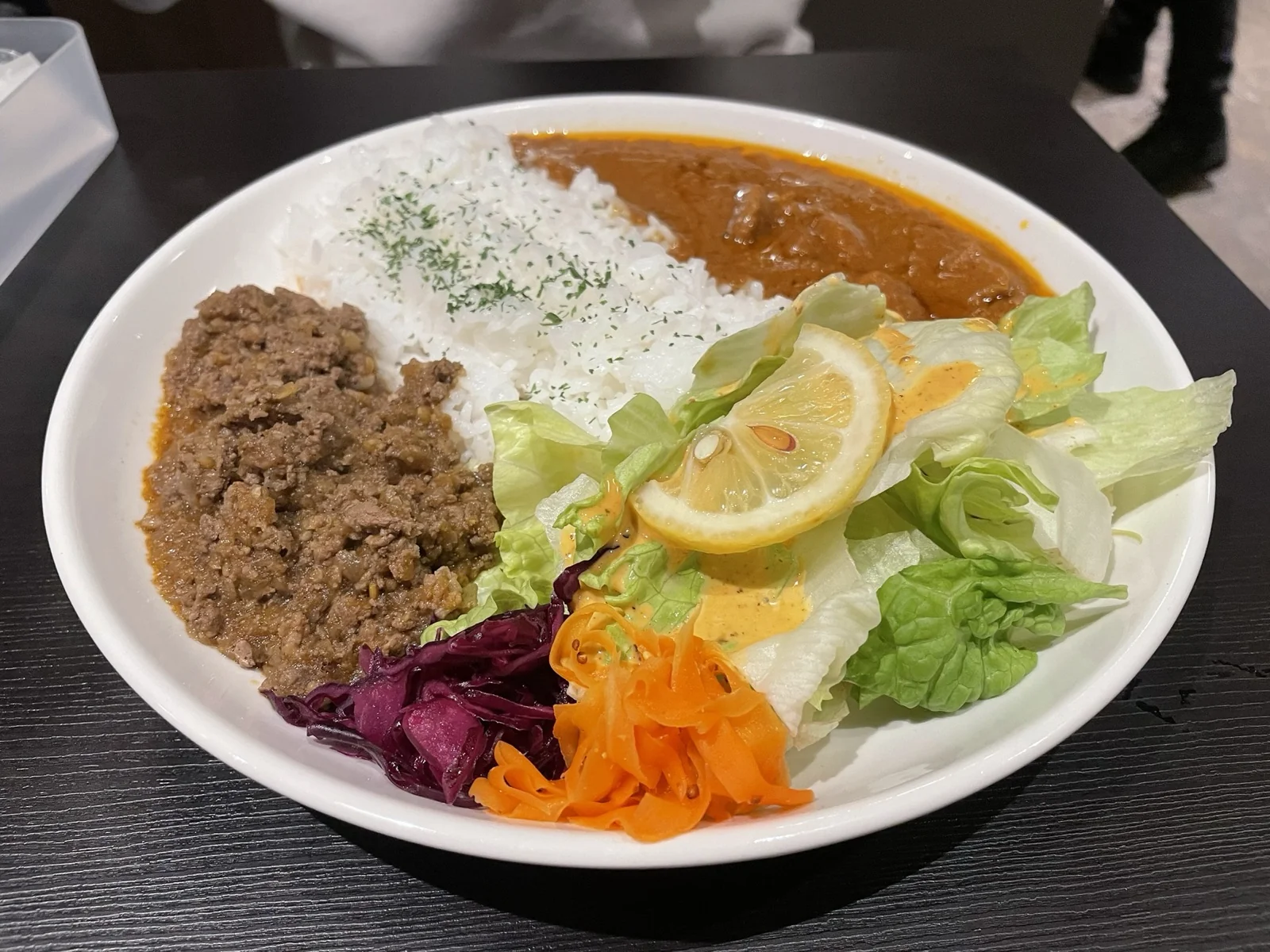
ZAO stand MY (Chicken Curry / Lamb Rice / Beef Shabu-Shabu)
There was a restaurant, ZAO stand MY (map link here), right downstairs from our guesthouse, and we ate here one night. Prices are on the high side and the food is just okay — check out other options first if you can, and come here only if nothing else works out.
We ordered a beef shabu-shabu hot pot — four large slices of Zao beef swished in plain water and eaten with dipping sauce. It left almost no impression; I didn't even photograph it and wouldn't recommend it. The ordinary curry rice was actually more satisfying.
- Is Yamadera Temple in Yamagata Worth Visiting? Access, Climb Time & Tips from a Real Visit
- W Hotel Macao Studio City Review: Room & Facility Highlights from a Real Stay
- Zao Onsen Travel Guide: Snow Monsters, Skiing, Hot Springs & Food in One Trip
- Wan Shou Hall Buffet at The Grand Hotel Kaohsiung: All-You-Can-Eat Seafood & Carved-to-Order Steak
- Duck Jane (鴨肉珍) in Kaohsiung's Yancheng District: A Beloved Old-School Duck Rice Shop